
- English
- 简体中文
- Español
- Português
- русский
- Français
- 日本語
- Deutsch
- tiếng Việt
- Italiano
- Nederlands
- ภาษาไทย
- Polski
- 한국어
- Svenska
- magyar
- Malay
- বাংলা ভাষার
- Dansk
- Suomi
- हिन्दी
- Pilipino
- Türkçe
- Gaeilge
- العربية
- Indonesia
- Norsk
- تمل
- český
- ελληνικά
- український
- Javanese
- فارسی
- தமிழ்
- తెలుగు
- नेपाली
- Burmese
- български
- ລາວ
- Latine
- Қазақша
- Euskal
- Azərbaycan
- Slovenský jazyk
- Македонски
- Lietuvos
- Eesti Keel
- Română
- Slovenski
- मराठी

The Materials Revolution Behind the Foldable Phone “Three-Way Battle”: How Engineering Plastics Support Trillion-Scale Device Innovation
From September 7 to 10, 2026, Huawei, Xiaomi, and Apple successively launched new foldable flagship products within 72 hours—Huawei’s Mate XT 2 second-generation triple-fold phone, Xiaomi’s 18 Fold “mid-fold,” and Apple’s first foldable phone, the iPhone Duo. The back-to-back launches by the three giants signal that foldable phones have officially moved from a “novelty category” to a core battlefield in the high-end market.
For the engineering plastics import industry, this device race sends a clear signal: demand for high-performance engineering plastics in foldable phones is shifting from “optional” to “a must-have.”
Material Roadmaps of the Three Flagship Phones
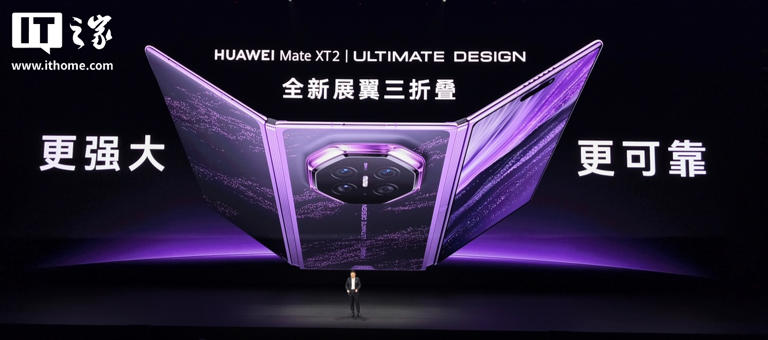
Huawei Mate XT 2 takes the most aggressive approach to materials. Its inner screen uses an ultra-tough multi-layer composite stack, including 322 cm² ultra-large UTG glass, a 20 µm aerospace-grade ultra-thin high-strength steel buffer layer, and a carbon fiber support layer, improving impact resistance by 200% over the previous generation. For the hinge, the second-generation Tiangong hinge system uses a five-arc-arm main shaft made of special steel with 2,400 MPa tensile strength, a significant upgrade from 1,900 MPa in the previous generation.
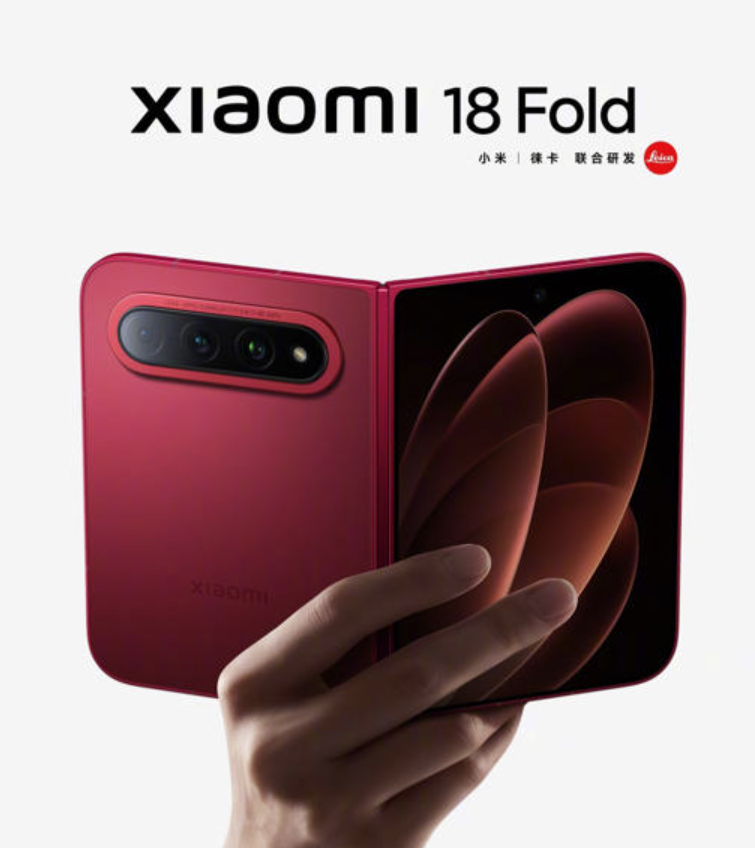
Xiaomi 18 Fold innovatively uses double-layer UTG ultra-thin glass paired with organic flexible insulating materials, and its touch layer has been fully upgraded to organic flexible materials, improving resistance to sharp-object impact by 258% over the previous generation. The use of “organic flexible insulating materials” is a typical example of engineering plastics in foldable touch modules. The mid-frame uses 7-series aluminum alloy, balancing lightweight design and structural strength.
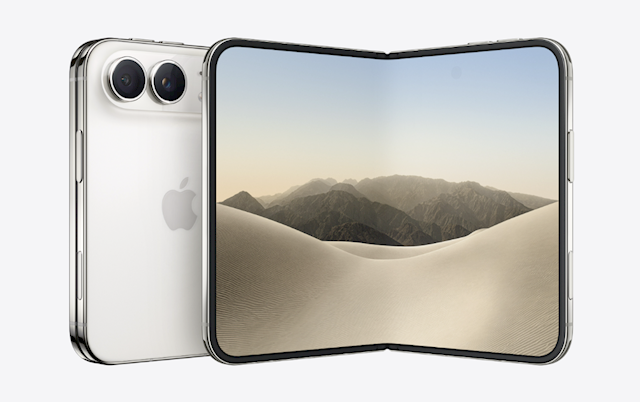
Apple’s iPhone Duo has made deep customization in polymer materials. Its inner screen uses a customized polymer cover layer with rigidity improved by up to 40% compared with other industry materials. The hinge is precision-assembled from more than 100 micro components and carbon fiber support plates. Apple’s entry means the foldable supply chain will see larger-scale growth in engineering plastics demand.
Core Applications of Engineering Plastics in Foldables
Material demand for foldable phones is reshaping the product structure of engineering plastics. The following categories are particularly critical:
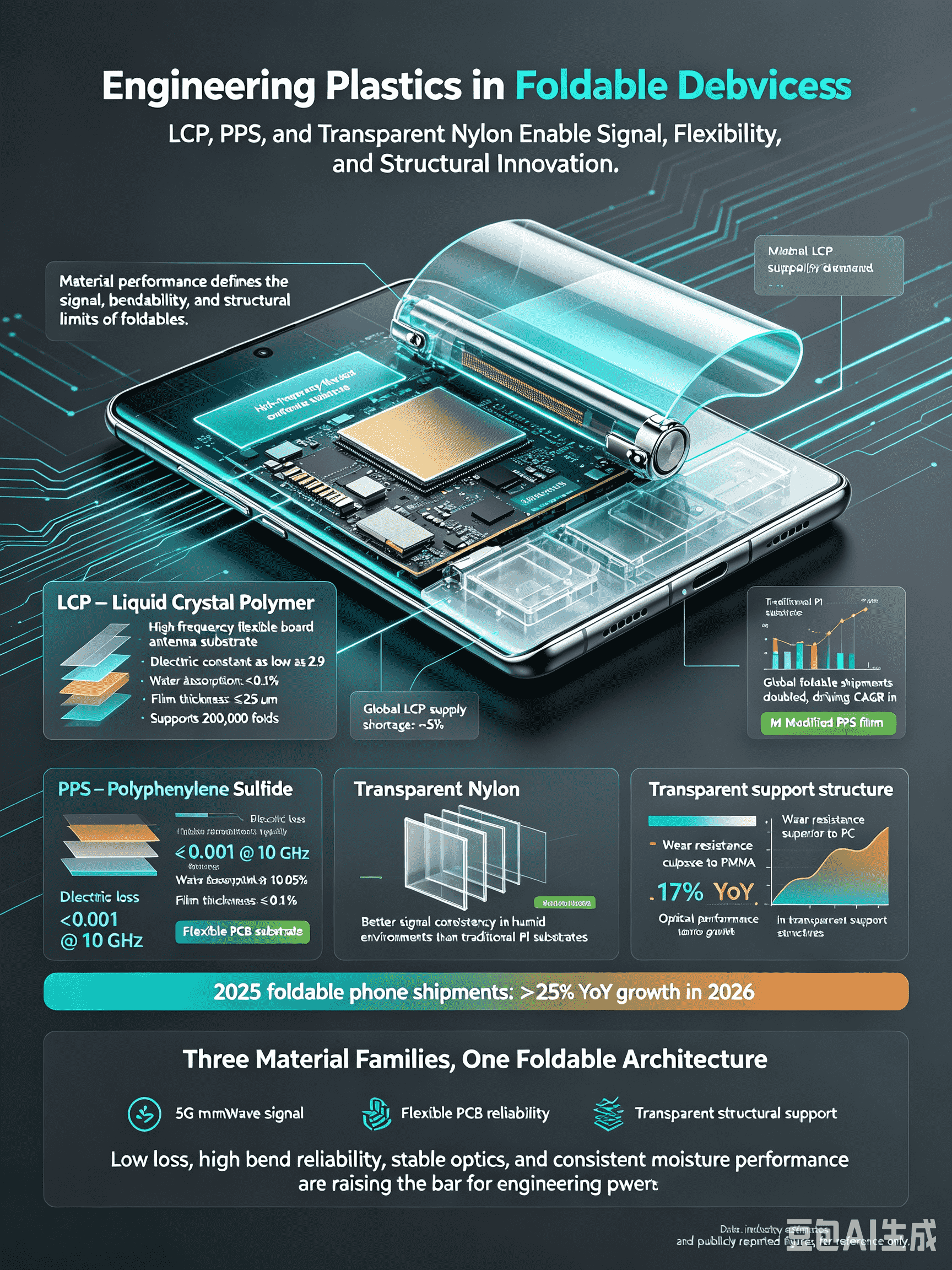
LCP (liquid crystal polymer) is the preferred substrate for high-frequency flexible board antennas in foldables. With a dielectric constant as low as 2.9, dielectric loss of only 0.002–0.004 at 10 GHz, and water absorption of less than 0.1%, it has become a key material for 5G mmWave signal transmission. Industry data show that LCP film thickness must be ≤25 µm to meet the requirement of 200,000 folds, and the doubling of foldable phone shipments in 2025 has driven a 30% CAGR in LCP film demand. At present, global LCP supply has seen a shortage of about 5% due to surging demand from high-end electronic applications.
PPS (polyphenylene sulfide) is expanding from traditional industrial applications into flexible electronic substrates. Modified high-elongation PPS films can now be used as flexible printed circuit board substrates, with dielectric loss at 10 GHz as low as below 0.001 and water absorption typically below 0.05%, providing far better signal consistency in humid environments than traditional PI substrates.
Transparent nylon is also growing rapidly in foldable structural components. Global foldable phone shipments in 2026 increased by more than 25% year on year. With wear resistance superior to PC and optical performance close to PMMA, transparent nylon saw a 17% year-on-year increase in usage in transparent support structures.
PI (polyimide) film continues to hold a core position in flexible displays. Its global market size reached US$2.24 billion in 2025, and the penetration rate of colorless PI film in foldable phone covers has exceeded 17%.
Market Data and Trade Implications
From a macro data perspective, the global high-performance engineering plastics market exceeded US$98 billion in 2026, with LCP, PPS, and specialty nylon together accounting for 47% of total supply. In the Asian market, the electrical and electronics sector still relies on imports for 30%–35% of high-performance resins such as LCP and PPS, mainly sourced from Japan, South Korea, and Germany.
It is worth noting that the center of gravity in the value chain is shifting downstream to precision manufacturing. The cross-border trade volume growth of primary-form engineering plastics is slowing, while the international trade scale of high-value-added and functionalized products is expected to grow by 9.7%. This means suppliers capable of providing high-performance customized material solutions will occupy a more favorable position in the future trade landscape.
Conclusion
The “three-way battle” in foldable phones is not only a competition among device brands but also a positioning war in the upstream materials supply chain. As new form factors such as triple-fold and mid-fold continue to emerge, application scenarios for engineering plastics such as LCP, PPS, transparent nylon, and PI will continue to expand. For engineering plastics import trading companies, getting an early start in foldable supply chain certification and building stable partnerships with high-end resin manufacturers in Japan and South Korea will be key to capturing the dividends of this round of device innovation.