
- English
- 简体中文
- Español
- Português
- русский
- Français
- 日本語
- Deutsch
- tiếng Việt
- Italiano
- Nederlands
- ภาษาไทย
- Polski
- 한국어
- Svenska
- magyar
- Malay
- বাংলা ভাষার
- Dansk
- Suomi
- हिन्दी
- Pilipino
- Türkçe
- Gaeilge
- العربية
- Indonesia
- Norsk
- تمل
- český
- ελληνικά
- український
- Javanese
- فارسی
- தமிழ்
- తెలుగు
- नेपाली
- Burmese
- български
- ລາວ
- Latine
- Қазақша
- Euskal
- Azərbaycan
- Slovenský jazyk
- Македонски
- Lietuvos
- Eesti Keel
- Română
- Slovenski
- मराठी

2026 Spring Festival Gala Robot Upgrade: From Yangge Dance to Backflips – A "Skeletal Evolution" Driven by Specialty Engineering Plastics
This year's CCTV Spring Festival Gala featured a group of robots dressed in colorful cotton-padded jackets, performing Yangge dance and twirling handkerchiefs. Their movements were not only fluid but also interactive, leaving a deep impression on the audience. While many marveled at the sophistication of the AI algorithms, from an industry insider's perspective, we recognized a revolution occurring on a different dimension—materials. The "skeletons" that enable these robots to perform backflips and spar without falling apart owe a great deal to the remarkable capabilities of specialty engineering plastics.

As seen on this year's Spring Festival Gala stage, humanoid robots are undergoing a quiet transformation of "weight loss and muscle gain." Our past image of robots often involved heavy, steel skeletons that moved slowly and posed safety risks. Today, however, the weight of some robots can be reduced to the range of 27kg to 45kg. This leap is underpinned by breakthroughs in lightweight materials. This pursuit isn't merely for aesthetics; it's a critical solution to the "range anxiety" hindering the industrialization of humanoid robots. Data shows that for every 10% reduction in weight, a robot can travel approximately 15% further on the same battery charge.
Driving this trend, specialty engineering plastics—such as Polyetheretherketone (PEEK) and Polyphenylene Sulfide (PPS), which are core products in our company's portfolio—are emerging as the new favorites in the industry.
Why do these robots need such "plastics"?
Take PEEK, often hailed as the "King of Comprehensive Performance," as an example. It is progressively replacing metals as the core material for robotic joints and skeletons. With equivalent strength, PEEK is about 50% lighter than aluminum and 70% lighter than steel. This allows robots to shed heavy burdens, move more nimbly, and simultaneously reduce the load and heat generation of joint motors. Looking at the performance data, PEEK boasts a tensile strength of 100-115 MPa and a stable flexural modulus around 3.6 GPa, placing it at the top tier among all thermoplastics. It maintains stability under high loads and impact, resisting permanent deformation. Its coefficient of friction is as low as 0.1-0.2, offering excellent self-lubricating properties. Combined with its high wear resistance, it is ideally suited for manufacturing joint gears and bearings that require no additional lubrication. More critically, PEEK has an extremely low moisture absorption rate of just 0.05%. This endows it with exceptional dimensional stability, ensuring tolerance control within ±0.01 mm even in high-humidity or high-temperature environments, guaranteeing the precision of robotic movements. The significant weight reduction and performance improvements seen in Tesla's Optimus Gen 2 humanoid robot are largely attributed to the extensive adoption of similar material solutions.
Beyond PEEK, PPS, known as the "King of Cost-Effectiveness," is also making significant strides in robotics. Its inherent high-temperature resistance, with a melting point around 280°C and continuous service capability above 200°C, is invaluable. Coupled with its chemical resistance and self-extinguishing flame retardant properties (UL-94V-0), it is particularly suitable for manufacturing robotic frames intended for operation in complex environments or as protective components near battery packs, ensuring electrical safety. PPS also possesses chemical resistance second only to fluoroplastics, demonstrating strong resistance to gasoline, oils, and various solvents. Its moisture absorption rate is less than 0.05%, ensuring excellent dimensional stability even under high temperature and humidity.
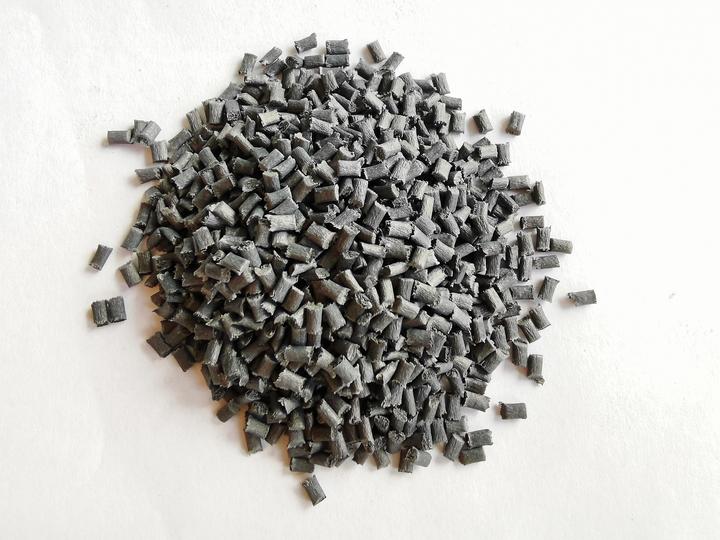
Furthermore, LCP (Liquid Crystal Polymer), with its excellent dielectric properties, is used in robot antenna housings and high-speed signal transmission components. This effectively provides the robot with "5G long-range vision," ensuring latencies below 10 milliseconds. LCP features a self-reinforcing nature with high strength and modulus, a heat deflection temperature reaching 355°C, and resistance to 320°C solder dipping. It is transparent to microwave radiation, resulting in extremely low signal transmission loss.
These specialty engineering plastics not only make robots "light as a swallow," but they also address the cost pain points of mass production. Traditional metal joint processing is often time-consuming and material-intensive. In contrast, materials like PEEK support injection molding for integrated forming, making them suitable for large-scale replication. Industry estimates suggest that the BOM cost for injection-molded parts in a single humanoid robot is around 5,000 RMB. While this represents a smaller portion of the total robot's material cost, these parts determine over 50% of the robot's weight and performance characteristics.
From an industry standpoint, this represents more than just a material substitution; it signifies another victory for "replacing steel with plastics" in advanced manufacturing. As an enterprise deeply involved in the trade and application development of imported engineering plastic raw materials, what we see extends beyond the few minutes of performance on the Spring Festival Gala stage. We see a trillion-yuan industrial chain opportunity on the horizon. With domestic companies making breakthroughs in the full industrial chain, from PEEK polymerization to carbon fiber composite manufacturing, and with active layout by manufacturers, the specialty engineering plastics once dominated by foreign suppliers are now injecting powerful innovative momentum into "Made-in-China" humanoid robots.
From cold metal to high-performance specialty plastics, the evolution of humanoid robots is, in essence, a history of innovation in new materials.
When future robots enter thousands of households, their lightweight yet robust "skeletons" may well originate from every granule of material we are researching, developing, and promoting today.