
- English
- 简体中文
- Español
- Português
- русский
- Français
- 日本語
- Deutsch
- tiếng Việt
- Italiano
- Nederlands
- ภาษาไทย
- Polski
- 한국어
- Svenska
- magyar
- Malay
- বাংলা ভাষার
- Dansk
- Suomi
- हिन्दी
- Pilipino
- Türkçe
- Gaeilge
- العربية
- Indonesia
- Norsk
- تمل
- český
- ελληνικά
- український
- Javanese
- فارسی
- தமிழ்
- తెలుగు
- नेपाली
- Burmese
- български
- ລາວ
- Latine
- Қазақша
- Euskal
- Azərbaycan
- Slovenský jazyk
- Македонски
- Lietuvos
- Eesti Keel
- Română
- Slovenski
- मराठी

BASF Achieves Full Local Production of Flame-Retardant TPU Portfolio in Shanghai, Empowering China's New Energy & Automation Industries Introduction
In the imported engineering plastics industry, the speed of supply chain response and the depth of technical service are often the key factors determining the success or failure of customer projects. In early March 2026, BASF, the global chemical giant, announced a move of profound significance for the Asia-Pacific market: its Shanghai Thermoplastic Polyurethane (TPU) production facility has officially obtained the qualification to produce the full Elastollan® FR (Flame-Retardant) TPU portfolio. This marks BASF's successful achievement of localized supply for its entire range of flame-retardant TPU products—from Eco-friendly Flame Retardant (FHF) to High-Performance Flame Retardant (FR)—in China. For Chinese enterprises at the heart of the new energy and industrial automation wave, this signifies not just a "localization upgrade" of the supply chain, but also an opportunity to connect with global-leading material technology with "zero time lag."

1. From "Imported" to "Local": BASF Completes the Final Piece of the Flame-Retardant TPU Puzzle
As early as 2023, BASF's Shanghai site had already achieved localized production of the Elastollan® FHF (Halogen-Free Flame Retardant) series. The official mass production of the FR grade now fills the most critical gap in BASF's flame-retardant solutions portfolio.
With this, BASF's Shanghai plant can now offer a complete portfolio of flame-retardant TPU products to customers in the Asia-Pacific region. This means that materials for flame-retardant cables and precision components, which previously relied on long-lead-time imports, can now be supplied "locally from Shanghai." For enterprises like ours, dedicated to shortening customer development cycles through trade and application development, this is an extremely positive signal – ensuring both material stability and delivery timeliness are guaranteed.
2. What is Elastollan® FR? More Than Just "Flame Retardant"
As industry operators, we need to deeply understand the technical value of materials to create value for our clients in material selection. The reason BASF's Elastollan® FR series attracts significant attention lies in its breakthrough beyond the "performance compromise" of traditional flame-retardant materials:
1. Dual Performance Guarantee: This series provides efficient flame retardancy while retaining the excellent mechanical properties inherent to TPU materials. It not only self-protects in open flames but also withstands high-frequency bending, abrasion, and chemical corrosion in harsh industrial environments.
2. Addressing Harsh Environments: For applications like high-voltage charging plugs in new energy vehicles and joint cables in robotics, standard flame-retardant materials often crack during dynamic use due to insufficient flexibility. Thanks to its optimized formulation, Elastollan® FR achieves an excellent balance between flame retardancy and flexibility.
3. Regulatory Compliance: With tightening environmental and safety regulations for electronic and electrical products across the Asia-Pacific region, the locally produced FR series helps our clients respond more quickly to compliance requirements and avoid technical barriers in international trade.
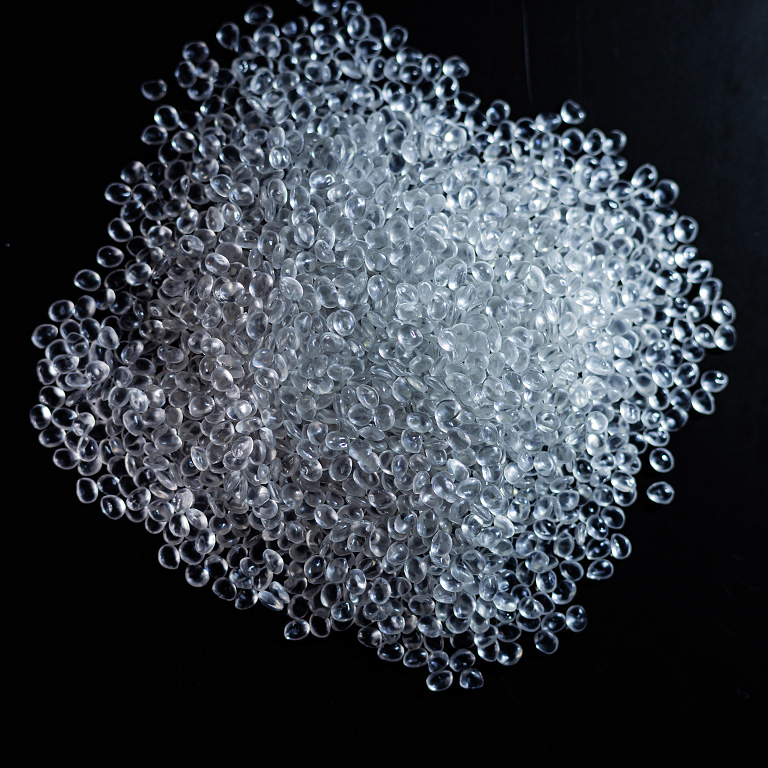
3. Precision Targeting: Anchoring the "Vessels" and "Nerves" of New Energy & Automation
BASF's capacity expansion move demonstrates strong market focus. BASF's official announcements repeatedly highlight three core application areas: industrial automation cables, robotic cables, and new energy vehicle charging pile cables.
• New Energy Vehicle Charging Piles: With the普及 of high-voltage fast charging technology, charging cables generate significant heat during operation and must absolutely prevent fire propagation in case of outer insulation damage. The thermal stability and flame retardancy of Elastollan® FR provide critical safety assurance for high-power charging.
• Industrial Automation & Robotics: Industrial robots function as "non-stop" productivity tools, with their internal cables acting as nerves and blood vessels. The materials require durability against abrasion and bending, combined with flame retardancy. The localized production at BASF's Shanghai base can significantly shorten the material waiting time during prototype and mold trials for automation equipment manufacturers.
4. Strategic Foresight: From "Product Export" to "Capability Embedding"
Rohit Roop Ghosh, Vice President and Head of TPU Business Asia Pacific at BASF, commented on the expansion: "The localization of Elastollan® FR not only allows us to respond more quickly to regional market technical needs but will also further consolidate our competitive advantage in strategic market segments – not just limited to cable applications, but also aiming to serve more areas including specialty tubing, hoses, and conveyor belts in the future."
This statement reveals the new strategy of the giant in the Chinese market: shifting from simply selling products to deeply embedding into the R&D and upgrade of the local industry chain.
5. Our Perspective: "Science-Industry-Trade Collaboration" Welcomes a Material "New Infrastructure"
As a comprehensive enterprise integrating trade, application development, product design, and molding manufacturing, we keenly observe that BASF's move is not just industry news, but also a "tailwind" for our business expansion.
With the full localization of BASF's flame-retardant TPU portfolio, we, as the bridge connecting materials and the market, will gain stronger support:
1. Faster Application Development: Leveraging localized inventory and technical support, we can conduct mold opening and testing for new energy precision components simultaneously with downstream clients, shortening development cycles from "months" to "weeks."
2. Optimized Cost Structure: Localized production reduces logistics and tariff costs, enabling us to offer more competitive high-performance material solutions to Chinese manufacturing customers.
3. Stronger Supply Chain Resilience: In a complex geopolitical landscape, the "In China for China" production strategy ensures the security of supply chains for critical sectors like new energy and high-end equipment.
Conclusion
The full-scale production of flame-retardant TPU at BASF's Shanghai site represents a significant commitment by a global chemical giant to bolster manufacturing in China. It not only meets the urgent demand for high-performance materials from China's new energy and automation industries but also reserves capacity for future technological iterations. As a professional enterprise deeply engaged in the imported engineering plastics field, we will closely follow this trend, leverage this "material new infrastructure," and assist our Chinese clients in accelerating on the safe, efficient, and sustainable track.