
- English
- 简体中文
- Español
- Português
- русский
- Français
- 日本語
- Deutsch
- tiếng Việt
- Italiano
- Nederlands
- ภาษาไทย
- Polski
- 한국어
- Svenska
- magyar
- Malay
- বাংলা ভাষার
- Dansk
- Suomi
- हिन्दी
- Pilipino
- Türkçe
- Gaeilge
- العربية
- Indonesia
- Norsk
- تمل
- český
- ελληνικά
- український
- Javanese
- فارسی
- தமிழ்
- తెలుగు
- नेपाली
- Burmese
- български
- ລາວ
- Latine
- Қазақша
- Euskal
- Azərbaycan
- Slovenský jazyk
- Македонски
- Lietuvos
- Eesti Keel
- Română
- Slovenski
- मराठी

PPA: The Superhero of Future Industry – How It's Quietly Reshaping Manufacturing
In the world of engineering plastics, one material is quietly revolutionizing multiple industries as the "high-performance champion" – that is PPA, polyphthalamide. If you follow automotive electrification, the miniaturization of electronic devices, or the extreme operation of industrial equipment, then PPA has likely already become a key driver behind these advancements without you even realizing it.
What is PPA? The "Special Steel" of the Plastic Family
PPA (Polyphthalamide) is a semi-crystalline thermoplastic, a member of the high-temperature nylon family. Unlike common plastics in daily life, PPA is more like the "special steel" of the plastics world—it retains the processing advantages of plastics while offering performance close to some metal materials.
This material is polymerized from aromatic diacids and aliphatic diamines. The aromatic rings in its molecular structure give it exceptional heat resistance and rigidity, while the amide bonds provide good mechanical strength and chemical resistance. It is this unique chemical structure that allows PPA to excel in extreme environments, making it an ideal substitute for many traditional plastics and even metal materials.
PPA's Three "Superpowers": Why Is It So Special?
1. The High-Temperature Stalwart
The most notable feature of PPA is its excellent heat resistance. Common engineering plastics like PA66 (Nylon 66) typically have a long-term use temperature of 120-130°C, whereas PPA can operate long-term in environments of 150-180°C and withstand short-term temperatures exceeding 200°C. This makes PPA an ideal choice for applications such as engine peripheral components and high-temperature electronic connectors.
2. Perfect Balance of Strength and Rigidity
PPA maintains excellent mechanical properties at high temperatures, with strength and rigidity far exceeding most engineering plastics. Even in humid environments, PPA's performance degradation is significantly less than that of traditional nylon materials, a characteristic crucial for components operating in complex conditions.
3. "Immune System" Against Chemical Corrosion
PPA has excellent resistance to a wide range of chemicals, including automotive coolants, lubricants, fuels, and various cleaning agents. This broad chemical resistance makes it perform outstandingly in environments exposed to multiple chemicals, such as in automotive and chemical equipment.
How is PPA Changing Industries? A Look at Three Major Application Areas
Automotive Electrification: PPA's Fast Lane
As the automotive industry transitions to electrification, PPA is playing an increasingly important role. In electric vehicles, core components like motors, electronic control systems, and battery packs need to operate under higher temperatures and harsher conditions where traditional plastics struggle.
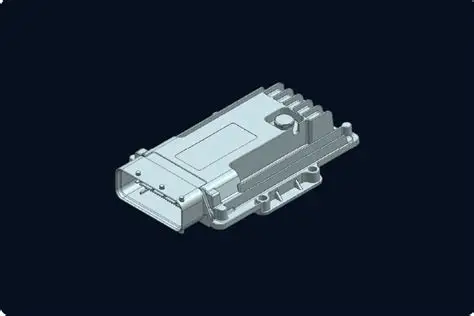
Leveraging its high-temperature resistance, chemical corrosion resistance, and excellent electrical properties, PPA is widely used in key parts of EVs such as charging interfaces, battery management system components, motor terminals, and sensor housings. For example, the internal components of a charging gun from a well-known EV brand use PPA material to ensure safe and stable operation even when high temperatures are generated during fast charging.
Electronics & Electrical: The Supporter Behind Miniaturization
The increasing miniaturization and high performance of electronic devices demand higher heat resistance and dimensional stability from internal components. PPA's low moisture absorption and excellent high-frequency electrical properties make it an ideal choice for precision electronic parts like fiber optic connectors, miniature circuit boards, and mobile phone antenna modules.
Particularly in 5G communication equipment, antenna components made from PPA can maintain stable dielectric properties under high-frequency signals, a feat difficult for many other plastics to achieve.
Industrial Equipment: Conqueror of Extreme Environments
In the industrial sector, PPA is used to manufacture components that need to withstand high temperatures, high pressure, and chemical corrosion, such as hot water pump parts, industrial valves, and hydraulic system components. Compared to traditional metal materials, PPA components are not only 30-50% lighter but also avoid corrosion issues, extending equipment service life.
PPA vs. Other Materials: Why Choose PPA?
• Compared to metals, PPA parts are 30-50% lighter, require no anti-corrosion treatment, can be molded into complex structures in one step, and reduce assembly processes.
• Compared to traditional engineering plastics like PA66 and PBT, PPA has a higher property retention rate in high-temperature and high-humidity environments, offering better long-term use stability.
• Compared to more expensive specialty engineering plastics like PPS and PEI, PPA has a clear advantage in cost-effectiveness, providing an "adequate and economical" solution for many applications.
Future Trends: Innovation Directions for PPA
With advancements in materials science, PPA is expanding its application boundaries through modification technologies:
• Reinforced PPA: Enhanced with glass or carbon fibers for higher strength and rigidity.
• Thermally Conductive PPA: Incorporating thermally conductive fillers for applications in electronic components requiring heat dissipation.
• Hydrolysis-Resistant PPA: Special formulations to improve durability in high-temperature, high-pressure steam environments.
• Laser Direct Structuring (LDS) PPA: Supports direct laser processing of circuits on components, enabling more compact electronic integration.
Selecting PPA Components: Professional Advice
For design engineers considering PPA, we recommend:
1. Define the Use Environment: Carefully analyze temperature, humidity, chemical exposure, and mechanical stress conditions.
2. Consider Processing Factors: PPA requires higher processing temperatures (typically 300-330°C), necessitating corresponding mold and process adjustments.
3. Long-Term Performance Validation: For critical components, conduct long-term thermal aging tests and chemical compatibility tests.
4. Seek Professional Support: Engage in deep communication with material suppliers to obtain material selection advice tailored to specific applications.
As an integrated enterprise with years of expertise in the engineering plastics field, we have witnessed PPA's evolution from a specialty material to a mainstream choice. Today, we not only provide customers with high-quality PPA raw materials but also offer full-process solutions from material selection and component design to molding manufacturing. We help customers fully leverage the performance advantages of PPA materials to create more competitive products.