
- English
- 简体中文
- Español
- Português
- русский
- Français
- 日本語
- Deutsch
- tiếng Việt
- Italiano
- Nederlands
- ภาษาไทย
- Polski
- 한국어
- Svenska
- magyar
- Malay
- বাংলা ভাষার
- Dansk
- Suomi
- हिन्दी
- Pilipino
- Türkçe
- Gaeilge
- العربية
- Indonesia
- Norsk
- تمل
- český
- ελληνικά
- український
- Javanese
- فارسی
- தமிழ்
- తెలుగు
- नेपाली
- Burmese
- български
- ລາວ
- Latine
- Қазақша
- Euskal
- Azərbaycan
- Slovenský jazyk
- Македонски
- Lietuvos
- Eesti Keel
- Română
- Slovenski
- मराठी

Decoding "Plastic Gold" PPS: How Extreme Performance Redefines the Boundaries of High-End Manufacturing
In the world of modern industry, where extreme performance is relentlessly pursued, a material hailed as "plastic gold" is quietly powering innovation—from speeding vehicles and soaring aircraft to precise electronic devices. This material is Polyphenylene Sulfide, or PPS. While the name might be unfamiliar to those outside materials science, it is the extraordinary properties PPS imparts that solve application challenges beyond the reach of traditional metals and other plastics, making it an indispensable key material in high-end manufacturing.
PPS: The King of High-Performance Engineering Plastics
What exactly is PPS? It is a semi-crystalline, high-performance thermoplastic engineering plastic. Simply put, its molecular structure is exceptionally stable, which directly creates a series of its amazing inherent characteristics:
• Outstanding Heat Resistance: Capable of continuous use at temperatures above 220°C, and can withstand short-term exposure above 260°C, far exceeding most Universal plastics.
• Excellent Chemical Resistance: Possesses resistance to acids, alkalis, organic solvents, and more, second only to Polytetrafluoroethylene (PTFE), earning it the title of "corrosion resistance champion."
• Inherent Flame Retardancy & Safety: Can achieve a UL94 V-0 rating (one of the strictest flame retardancy standards) without adding flame retardants, offering inherent high safety.
• Exceptional Dimensional Stability & Mechanical Strength: Exhibits minimal dimensional change across high and low temperatures, with high rigidity and excellent properties.
• Superb Electrical Insulation Properties: Maintains stable electrical performance even in high-temperature, high-humidity environments.
It is the combination of these "trump card properties" that allows PPS to break into areas with extremely stringent material requirements and perform with ease.
PPS's Three Major Battlegrounds: Automotive, Electronics & Electrical, and Industrial
1. Automotive: A Key Enabler of Lightweighting and Electrification
In the wave of automotive "lightweighting" and "electrification," PPS plays a crucial role. It is gradually replacing metals and traditional plastics to manufacture critical components that require high-temperature resistance, oil resistance, and dimensional precision:
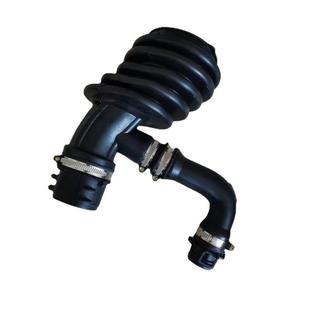
• Engine Bay Components: Turbocharger intake pipes, engine cooling system parts, oil pump housings, etc., must endure continuous high temperatures and oil exposure in the engine compartment.
• Transmission & Braking Systems: Sensor components, transmission modules, ABS brake system parts, demanding material stability and reliability under high load.
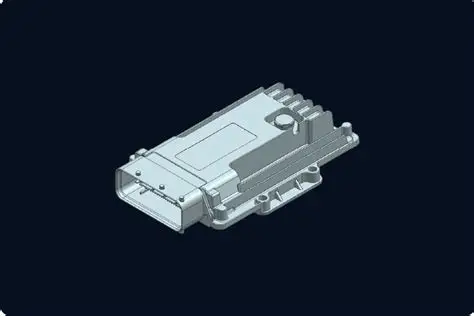
• New Energy Vehicle Core: In electric vehicles, due to its excellent electrical insulation and heat resistance, PPS is widely used in battery module brackets, connectors, motor insulation parts, etc., ensuring the safety of the system.
2. Electronics & Electrical: Guardian of Precision and Safety
In the miniaturized, integrated world of electronics, PPS is the ideal choice for manufacturing high-end structural parts.
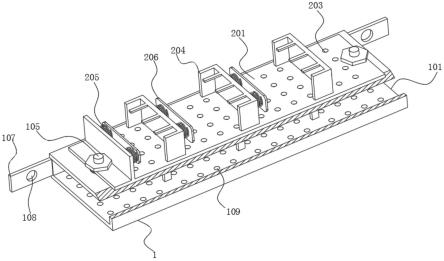
• Surface-Mount Technology (SMT): Its dimensional stability and resistance to reflow soldering temperatures (instantaneously above 260°C) make it one of the best materials for SMT connectors, chip sockets, and coil bobbins, preventing deformation during soldering.
• Appliances for Harsh Environments: Used for brackets and housings of heating elements in high-end irons, microwave ovens, heaters, etc., ensuring safety under long-term thermal exposure.
• Electrical Insulation: Manufacturing high-voltage sockets, transformer bobbins, switch components, etc., ensuring electrical safety.
3. Industrial & Chemical: Conqueror of Harsh Environments
In industrial fields like chemical processing, environmental protection, and energy, PPS faces extreme challenges of strong corrosion, high wear, and continuous high temperatures.
• Chemical Corrosion Protection: Used to make pump housings, impellers, valve linings, pipes, filters, etc., handling various corrosive media, with lifespan far exceeding ordinary metals.
• Energy Saving & Environmental Protection: In flue gas desulfurization (FGD) systems and wastewater treatment equipment, PPS fiber or composites are used to make filter bags resistant to high temperatures and acid/alkali corrosion, forming the core filter media for baghouse dust collection technology.
• Precision Instruments: Used to manufacture medical device components requiring repeated high-temperature sterilization,precise instrument gears, and structural parts.
Enabling Application: Not Just Material, but Integrated Solutions
The Outstanding performance of PPS is the foundation, but transforming it into reliable parts for customers requires full-chain technical empowerment from material modification to molding manufacturing.
• The Art of Material Modification: Pure PPS resin is like uncut jade. Through modification techniques like reinforcement (adding glass fiber, carbon fiber), toughening, filling, and alloying, its mechanical strength, impact resistance, thermal conductivity, wear resistance, or conductivity can be directionally enhanced to adapt to vastly different specific application scenarios.
• The Challenge of Precise Molding: The crystalline nature of PPS gives it low and controllable shrinkage during molding, facilitating the production of high-precision parts. However, its high melting point and low melt viscosity pose higher demands on mold design and injection molding processes. Professional mold temperature control, reasonable gate design, and strict requirements on material drying are key to ensuring part performance and surface quality.
The Future is Here: PPS Innovation Frontiers
The application landscape of PPS continues to expand. With the rapid development of industries like 5G Communication. AIoT, and aerospace, materials face demands for higher frequency, better weather resistance, and greater integration. For example:
• 5G/6G Communication: Modified PPS with low dielectric loss can be used to manufacture high-frequency, high-speed connectors and base station antenna components.
• Sustainable Development: Research into bio-based or recyclable PPS composites is responding to the global call for green manufacturing.
• More Extreme Performance: Exploring next-generation PPS composite materials with higher thermal conductivity, lower wear, or better electromagnetic shielding through modifications like nanotechnology.
In a sense, the application history of PPS is a microcosm of modern industry constantly challenging performance limits and seeking better solutions. It is more than just a cold chemical polymer; it is a powerful tool in engineers' hands to realize designs and break through technical bottlenecks. Choosing PPS often means opting for higher reliability, longer service life, better overall cost-effectiveness, and the potential to stay one step ahead in the fierce market competition.