- English
- 简体中文
- Español
- Português
- русский
- Français
- 日本語
- Deutsch
- tiếng Việt
- Italiano
- Nederlands
- ภาษาไทย
- Polski
- 한국어
- Svenska
- magyar
- Malay
- বাংলা ভাষার
- Dansk
- Suomi
- हिन्दी
- Pilipino
- Türkçe
- Gaeilge
- العربية
- Indonesia
- Norsk
- تمل
- český
- ελληνικά
- український
- Javanese
- فارسی
- தமிழ்
- తెలుగు
- नेपाली
- Burmese
- български
- ລາວ
- Latine
- Қазақша
- Euskal
- Azərbaycan
- Slovenský jazyk
- Македонски
- Lietuvos
- Eesti Keel
- Română
- Slovenski
- मराठी

Why CYCOLOY™ CX7240 is a Reliable Choice for High-Performance, Non-Halogen Flame Retardant PC/ABS
In industries such as electronics & electrical, rail transit, medical devices, and smart home appliances, a core design contradiction is becoming increasingly prominent: how to reduce volume and weight while meeting stringent safety and flame retardancy standards? Traditional halogenated flame retardant materials are low-cost but face growing environmental regulations and concerns over toxic smoke emission upon combustion. Non-halogen flame retardant PC/ABS alloys have therefore become a mainstream choice in engineering plastics. SABIC’s CYCOLOY™ CX7240, with its verifiable performance data, authoritative certifications, and stable processing characteristics, stands out as a reliable solution in this field.
1. Material Essence: Technical Advantages of PC/ABS Alloys
CX7240 is a modified blend of polycarbonate (PC) and acrylonitrile-butadiene-styrene (ABS). PC provides excellent heat resistance, impact strength, and dimensional stability; ABS improves melt flow, making the material easier to injection mold into complex thin-wall parts. The synergy between the two achieves an ideal balance between mechanical performance and processability. The flame retardant system uses SABIC’s non-chlorinated, non-brominated technology, containing no halogenated additives, and meets long-term compliance requirements of RoHS, REACH, and other environmental directives.
2. Verifiable Key Physical Properties: Rigidity and Toughness Combined
For engineering plastics selection, designers need traceable, reproducible data. CX7240 is tested according to ASTM and ISO standards, with the following core indicators:
• Density/Specific Gravity: 1.19–1.20 g/cm³ (ASTM D792 / ISO 1183) – beneficial for lightweight design; compared to traditional flame retardant ABS, part weight can be reduced by approximately 5–10% for the same volume.
• Melt Flow Rate (MFR): 15–18 g/10min (260°C / 2.16kg) – medium-high flow grade, capable of filling thin-wall (0.8–1.5 mm) and long-flow-path molds, reducing short shot risk.
• Tensile Modulus: 2600 MPa (ASTM D638 / ISO 527) – provides sufficient structural stiffness for load-bearing components such as housings and brackets.
• Tensile Strength: Yield strength 65.0 MPa, break strength ≥58.0 MPa – indicates the material yields before fracture, offering the toughness reserve required for engineering plastics.
• Flexural Modulus: approx. 2500 MPa; Flexural Strength: 96–104 MPa (ASTM D790 / ISO 178) – reliable resistance to bending deformation.
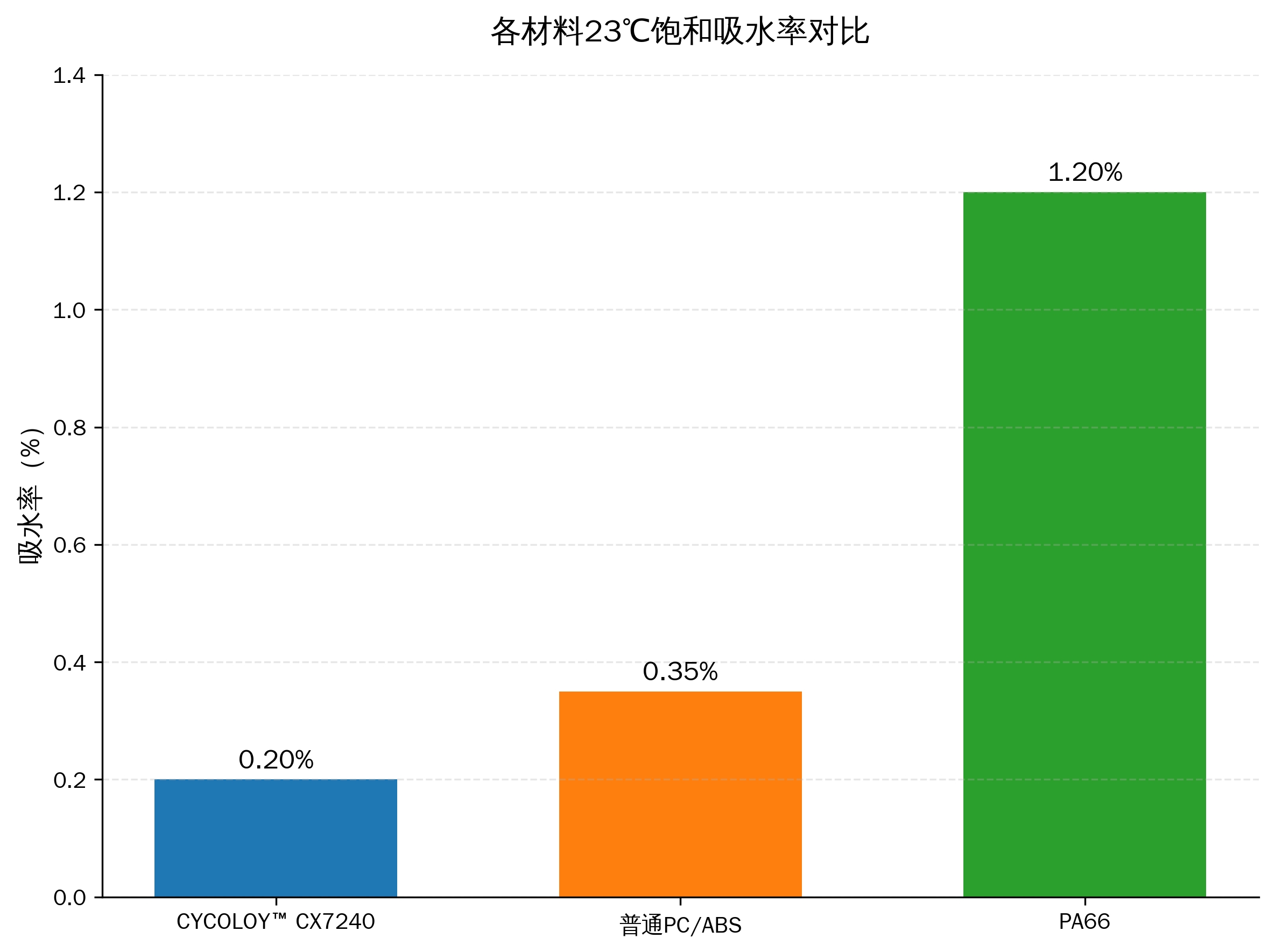
• Water Absorption (23°C saturated): only 0.20% – much lower than hygroscopic materials like nylons, resulting in minimal dimensional change under humid/hot conditions, suitable for precision molded parts such as connectors and sensor housings.
All the above data can be verified in SABIC’s official datasheets and UL Yellow Card (e.g., file number E207780). Shanghai Weisa Plastic Technology Co., Ltd. can provide original factory reports with each shipment to ensure traceability.
3. Non-Halogen Flame Retardancy: Engineering Value of Thin-Wall V-0
A key indicator for evaluating flame retardant materials is the UL 94 rating under thin-wall conditions. CX7240 has achieved the following certifications:
• UL 94 V-0: down to 0.75 mm;
• UL 94 5VA: 3.0 mm;
• UL 94 5VB: 1.5 mm.
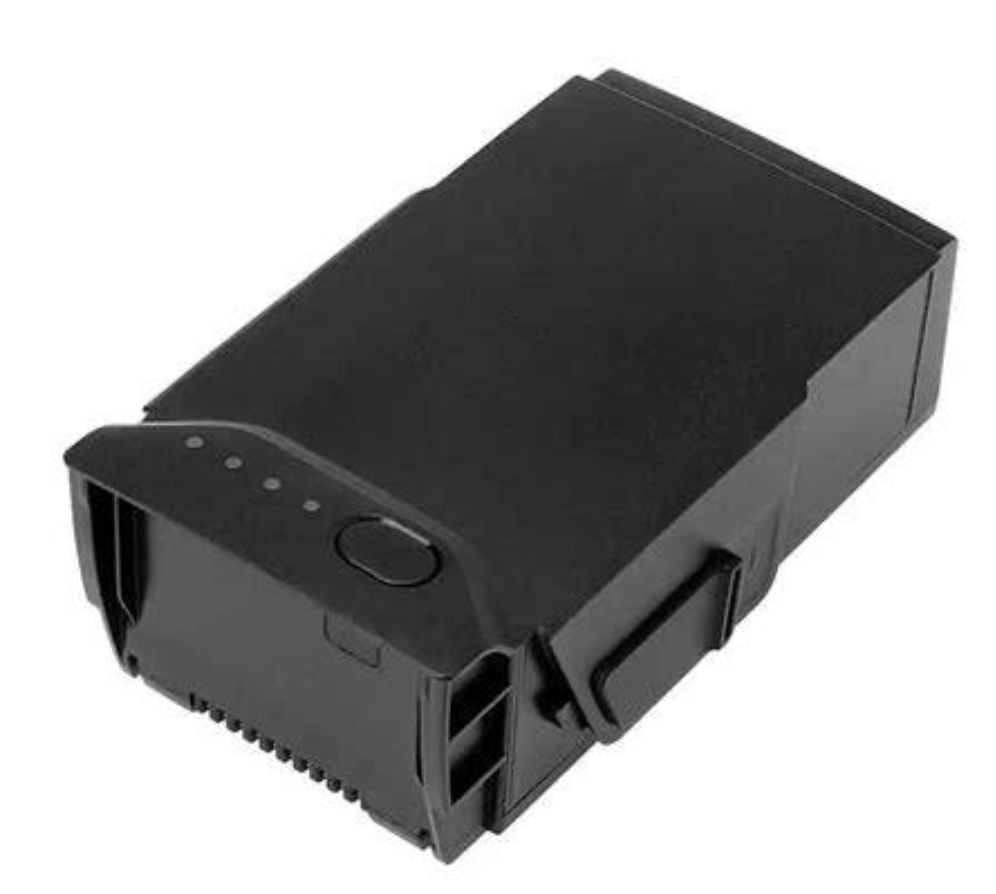
The significance of 0.75 mm V-0 deserves special attention: many non-halogen flame retardant PC/ABS compounds easily achieve V-0 at 1.5 mm or above, but often downgrade to V-2 or HB below 1.0 mm. CX7240 maintains V-0 at 0.75 mm thickness, meaning it can be used for ultra-thin electronic product housings (e.g., drone battery compartments, smart wearables, power adapter enclosures) without needing additional metal parts or coatings. Meanwhile, the non-halogen system generates low smoke and low corrosive gases upon combustion, meeting the low-toxicity fume requirements of standards such as rail transit EN45545-2 and electrical/electronic IEC 62368-1.
4. Practical Problems Solved: From Material Selection to Production
Through years of serving customers in electronics, electrical, and industrial equipment sectors, we have summarized three main practical problems that CX7240 solves:
• Thin-wall flame retardancy failure: many materials cannot pass V-0 testing at wall thicknesses below 1.0 mm, forcing designers to increase thickness or modify structures, conflicting with lightweight goals. CX7240 allows direct design at 0.75 mm wall thickness without compromise.
• Halogen compliance risk: electronic equipment exported to the EU, North America, and other markets requires halogen-free declarations. CX7240 avoids PBB, PBDE, and other polybrominated diphenyl ethers at the formulation source, simplifying customers’ compliance documentation.
• Narrow injection molding process window: some high-flame-retardancy materials have poor flow, leading to flow marks, burning, or mold deposits. CX7240 has an MFR of 15–18, recommended melt temperature 260–280°C, mold temperature 60–80°C, allowing stable production on general-purpose injection molding machines and reducing setup time.