
- English
- 简体中文
- Español
- Português
- русский
- Français
- 日本語
- Deutsch
- tiếng Việt
- Italiano
- Nederlands
- ภาษาไทย
- Polski
- 한국어
- Svenska
- magyar
- Malay
- বাংলা ভাষার
- Dansk
- Suomi
- हिन्दी
- Pilipino
- Türkçe
- Gaeilge
- العربية
- Indonesia
- Norsk
- تمل
- český
- ελληνικά
- український
- Javanese
- فارسی
- தமிழ்
- తెలుగు
- नेपाली
- Burmese
- български
- ລາວ
- Latine
- Қазақша
- Euskal
- Azərbaycan
- Slovenský jazyk
- Македонски
- Lietuvos
- Eesti Keel
- Română
- Slovenski
- मराठी

What is PFAS and why is the engineering plastics industry paying attention to it?
Lately, many people in the engineering plastics business have noticed a new "hard requirement" from customers before placing orders: please provide a PFAS test report. Some are confused: "What is PFAS? How could it be in my plastic parts? Why do customers insist on this report?" Let's break it down in plain language.
1. PFAS: Nicknamed "Forever Chemicals"
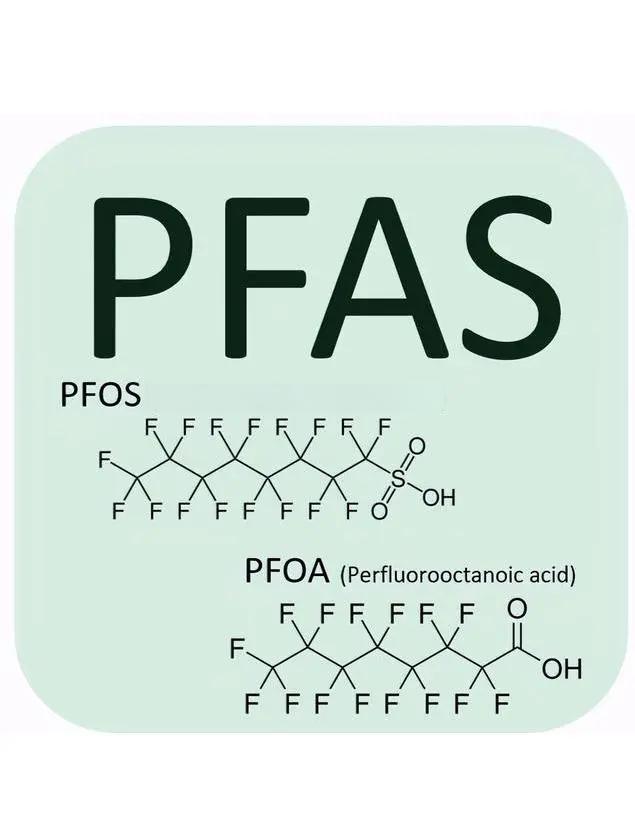
PFAS is a large family of chemical substances – over 10,000 known types. Their biggest feature: they are extremely tough. The bond between carbon and fluorine atoms is so stable that it hardly breaks down in nature. That's why they're called "forever chemicals." This means PFAS can accumulate in the environment and in our bodies. Long-term exposure to certain PFAS has been linked to increased cancer risk, and effects on the immune and endocrine systems.
Because they are water-repellent, oil-repellent, heat-resistant, and corrosion-resistant, PFAS are widely used in non-stick pans, waterproof jackets, food packaging paper, firefighting foams, and many everyday products. And because their dangers are becoming clearer, countries around the world are cracking down on PFAS. The EU, the US, and China are all introducing stricter regulations.
2. Why is PFAS found in engineering plastics?
You might ask: "I make plastic parts – what do these chemicals have to do with me?" The answer lies in a group of materials called fluoropolymers.
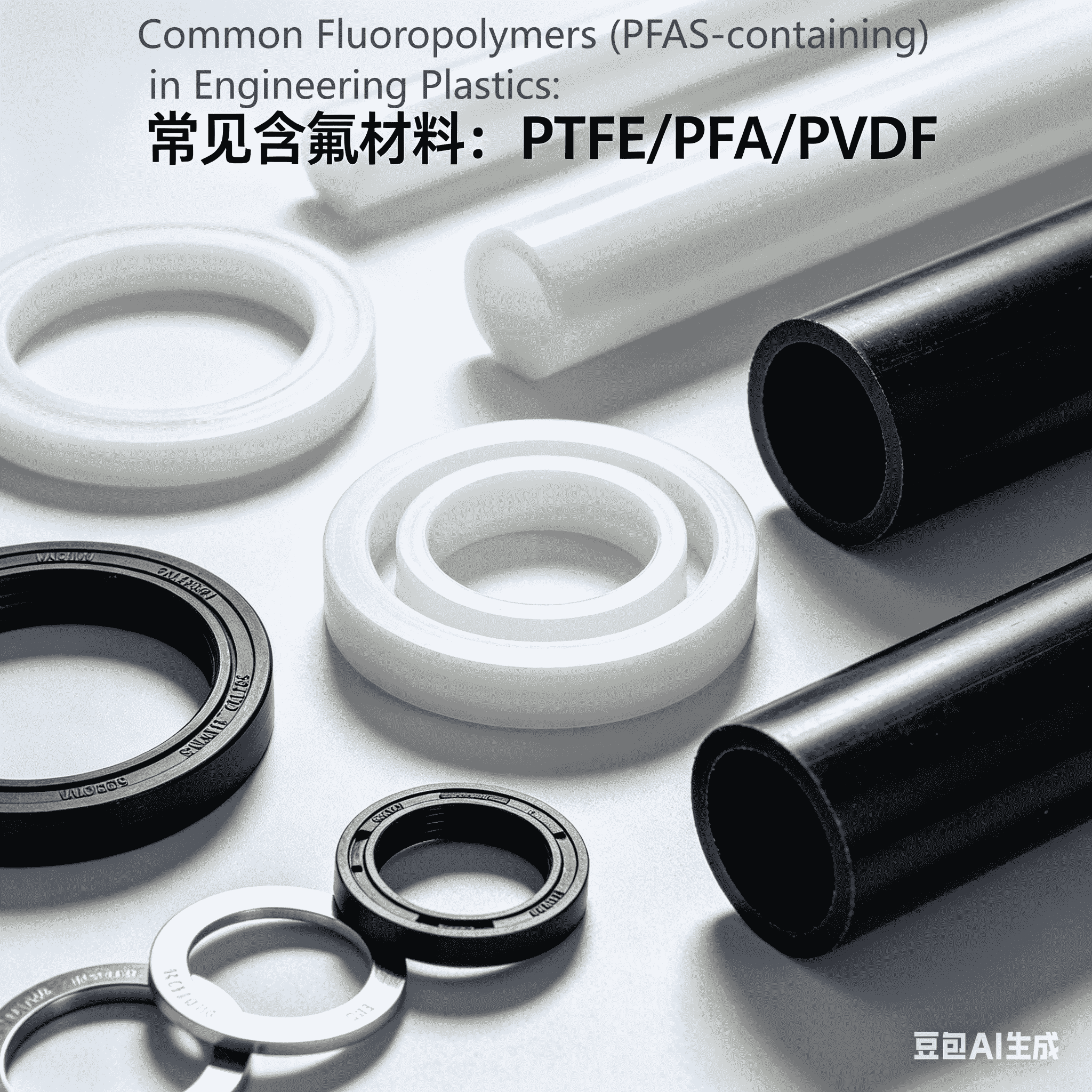
Common engineering plastics like PTFE (Teflon), PFA, FEP, and PVDF all belong to the PFAS family. They are used in plastics for two main purposes:
• As base material: directly made into seals, valve liners, corrosion-resistant pipes, and other high-performance parts.
• As processing aid: a tiny amount added to ordinary plastics improves flow, makes extrusion smoother, and gives the surface better lubricity and wear resistance.
Think of fluorinated materials as the "special forces" of the plastics world – small in quantity, but indispensable for tough applications.
3. Why do customers insist on a PFAS report?
It's not to make your life harder. The whole supply chain is dealing with a "PFAS phase-out" storm.
a) A hard barrier for export trade
The EU has proposed a broad restriction on over 10,000 PFAS substances, aiming to phase them out by 2030. The US has set near-zero tolerance limits for PFAS in drinking water. China has also listed PFAS in its key controlled new pollutants catalog. To export your products smoothly, customs may require proof that they don't contain banned PFAS. Without a report, your goods could be detained, returned, or even destroyed.
b) Compliance chain from downstream big customers
Your customers – for example, those making auto parts, medical consumables, or food packaging – have their own customers: big brands (like Tesla, Siemens, or McDonald's packaging suppliers). Those end brands demand strict environmental compliance and check every tier of the supply chain. When your customer asks you for a PFAS report, they're simply passing down the pressure. Whoever can't produce a report gets kicked out of the supply chain.
c) Avoiding huge legal payouts
The legal risks of PFAS contamination have already hit big companies hard. BASF, for example, paid over $300 million in settlements related to PFAS issues. If your product is found to contain excessive PFAS, you could face customer claims, reputational damage, or even lawsuits. A test report is your "shield" to prove compliance.
4. How is testing done, and what's the trend?
Common testing methods include the EU standard EN 17681-1 (requiring total organic fluorine below 50 ppm), and ISO 23702 for plastics. Reputable third-party labs can issue these reports.
More importantly, the entire engineering plastics industry is accelerating "PFAS-free" transformation. Major players like BASF, Asahi Kasei, and SABIC have already launched fluorine-free low-friction materials and medical-grade modified resins. In short, whoever completes the PFAS-free transition first will gain an edge in the next round of competition.
Conclusion
A PFAS report is no longer an optional "extra" – it has become a must-have for engineering plastics trade. Behind it are tightening global regulations, demands from end brands, and legal risk pressure.