
- English
- 简体中文
- Español
- Português
- русский
- Français
- 日本語
- Deutsch
- tiếng Việt
- Italiano
- Nederlands
- ภาษาไทย
- Polski
- 한국어
- Svenska
- magyar
- Malay
- বাংলা ভাষার
- Dansk
- Suomi
- हिन्दी
- Pilipino
- Türkçe
- Gaeilge
- العربية
- Indonesia
- Norsk
- تمل
- český
- ελληνικά
- український
- Javanese
- فارسی
- தமிழ்
- తెలుగు
- नेपाली
- Burmese
- български
- ລາວ
- Latine
- Қазақша
- Euskal
- Azərbaycan
- Slovenský jazyk
- Македонски
- Lietuvos
- Eesti Keel
- Română
- Slovenski
- मराठी

Ongoing Middle East Geopolitical Tensions Disrupt Global Engineering Plastics Supply Chains – What Importers Face and How to Respond
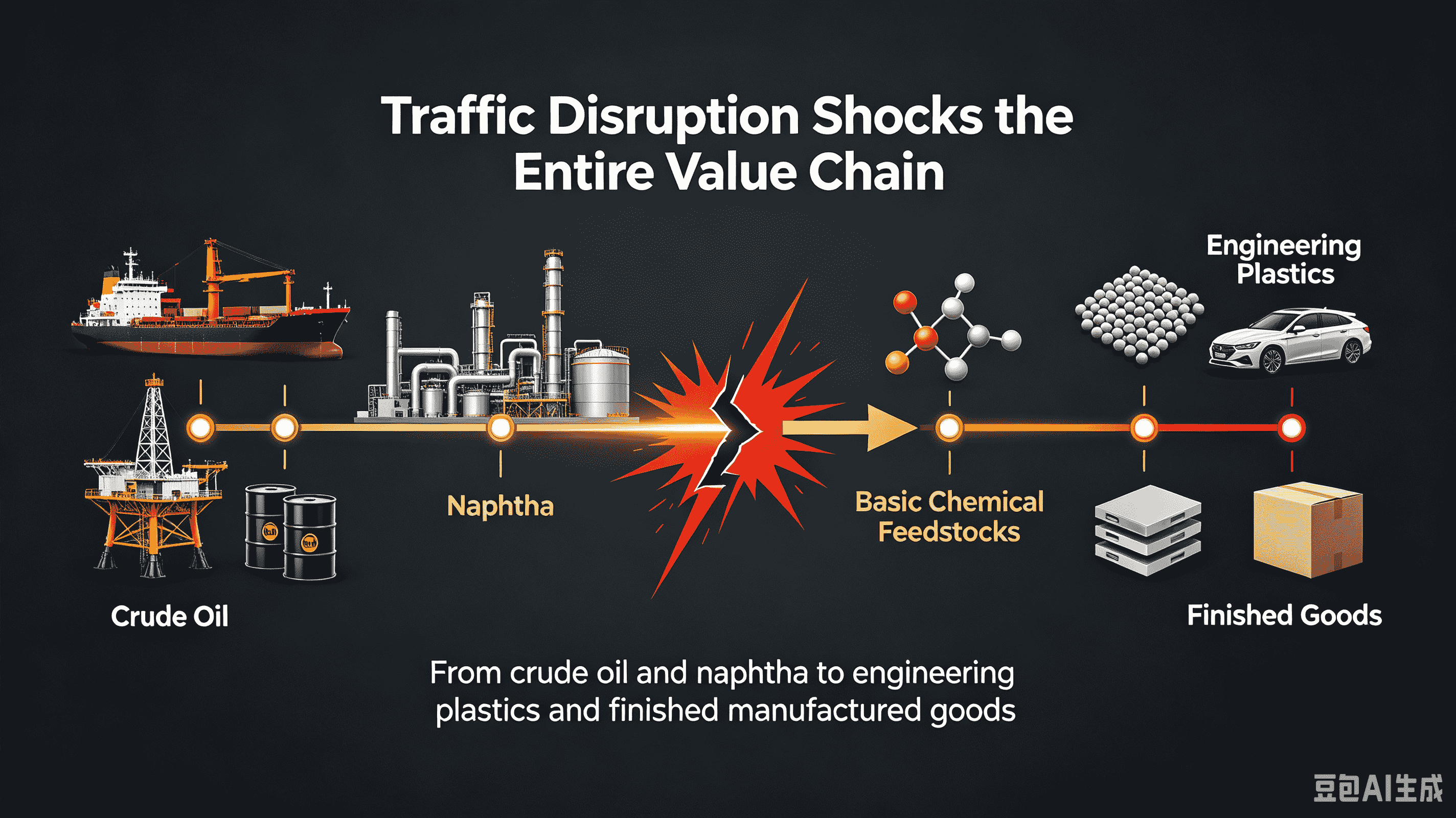
Since the escalation of geopolitical tensions in the Middle East in late February 2026, disruptions to shipping through the Strait of Hormuz have become a major concern for the global petrochemical industry. As the maritime "choke point" connecting the Persian Gulf to the Indian Ocean, this narrow passage – just 33 kilometers wide at its narrowest – handles approximately 20 million barrels of oil daily. Any disruption to traffic sends shockwaves down the entire value chain: from crude oil and naphtha to basic chemical feedstocks, engineering plastics, and ultimately finished manufactured goods. For manufacturers worldwide that rely on imported branded engineering plastics, this conflict is reshaping procurement patterns in three critical dimensions.
1. Heightened Supply Disruption Risks and Significantly Extended Lead Times
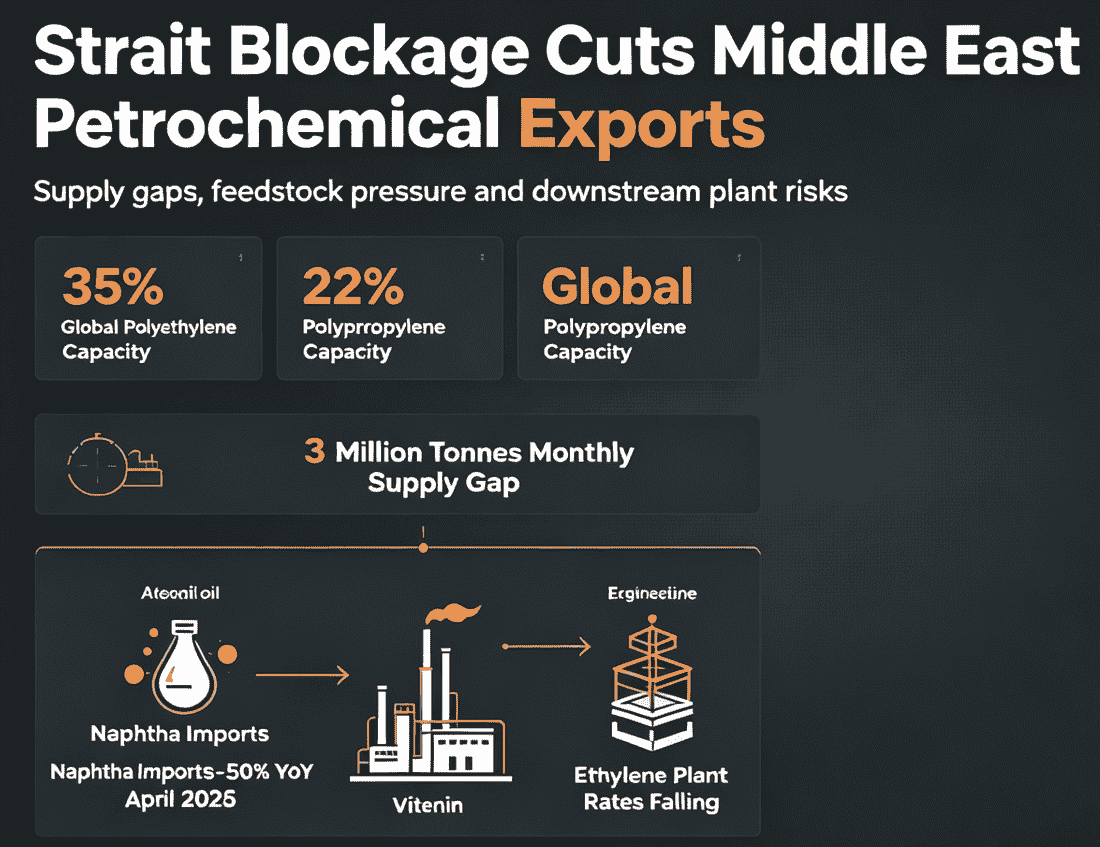
The blockage of shipping through the Strait of Hormuz has directly cut off the export routes for petrochemical products from the Middle East. The region accounts for approximately 35% of global polyethylene capacity and 28% of polypropylene capacity. The export shortfall has created a monthly supply gap of nearly 3 million tonnes in international polyolefin markets. Even more concerning is the impact on naphtha – a key feedstock for ethylene, propylene, and other basic chemicals. In April 2026, naphtha imports into major Asian markets fell by more than 50% year on year, hitting multi year lows. The shortage of naphtha quickly cascaded downstream, forcing ethylene plant operating rates in Asia to decline significantly, with some units planning shutdowns in August due to feedstock scarcity.
In the specialty engineering plastics segment, supply chain shocks have been even more severe. The Jubail industrial complex in Saudi Arabia, which supplies approximately 70% of global capacity for electronic grade polyphenylene ether (PPE) resin, has been completely shut down since late March with no clear timeline for resuming production. Market prices for PPE resin surged as much as 400% in a short period, reflecting widespread panic over supply disruptions.
For importers, arrival times for engineering plastics sourced from the Middle East have become entirely unpredictable. Under normal conditions, a voyage from the Persian Gulf to major Asian ports via the Strait of Hormuz takes about two weeks; now, ships must reroute around the Cape of Good Hope, adding 10 to 15 days to the journey, while insurance premiums along the route have skyrocketed. Some cargoes already loaded at Gulf ports remain stranded and cannot be shipped, leaving importers with no certainty on delivery schedules.
2. Mounting Cost Pressures from Multiple Directions
Cost pressures are emerging from three fronts:
Feedstock costs – International crude oil prices surged from the mid $80s per barrel in early July to briefly break above $100 per barrel later that month. Multiple forecasts indicate that the oil market will face a significant inventory deficit in 2026, with prices likely to remain in the $80–120 per barrel range. The rise in crude prices directly pushes up production costs for engineering plastics – for example, ABS market prices climbed as much as 50%, while polypropylene rose by over 45%.
Freight costs – Security risks in the Red Sea route continue to drive up shipping expenses. Following recent attacks on Saudi energy vessels, the additional transport surcharge for transiting the Bab el Mandeb strait has reached as high as $140 per tonne. Tanker freight rates and insurance costs have both increased in tandem.
Supplier price announcements – Global chemical majors have implemented multiple price hikes. Celanese has announced several rounds of engineering plastics price increases in 2026; BASF, Dow, Mitsubishi Chemical and other industry leaders jointly raised prices in late April, with some grades seeing increases of up to 60%. In July, BASF announced a €200/tonne increase across its entire European engineering plastics portfolio, effective August. These cost pressures are cascading from upstream suppliers to end users.
3. Narrowing Procurement Windows; Risk Management Becomes a Core Competency
Under the dual pressures of supply disruption and rising costs, procurement decisions for imported engineering plastics face new challenges:
Lead times – The normal 4 to 6 week delivery cycle has generally stretched to 8–12 weeks, and for some scarce grades, delivery dates cannot even be confirmed.
Price volatility – Geopolitical developments remain highly fluid: in early July, markets priced in expectations of a de escalation, and oil prices retreated; on July 7, following a U.S. military strike, prices quickly broke above $100; in early August, news emerged of positive progress in U.S. Iran negotiations and possible reopening of the Strait, triggering sharp market sentiment swings. Such violent fluctuations have rendered traditional quarterly fixed price procurement models nearly unworkable.
Supply stability – The Middle East accounts for a very large share of global capacity for ethylene, polyethylene and other basic chemicals. Prolonged closure of the Strait would force Asian chemical producers – which depend on Middle Eastern feedstocks – to cut output, and Asia is a major manufacturing base for engineering plastics processing.
4. Practical Strategies and Recommendations
In this challenging supply chain environment, we recommend that importers of engineering plastics focus on the following areas:
(1) Extend procurement lead times. Consider lengthening your standard procurement cycle from 4 6 weeks to 8 12 weeks to build in sufficient buffer for logistics uncertainties.
(2) Diversify sources of supply. Some suppliers, such as SABIC, have already attempted to ship via Saudi Arabia's western ports to bypass the Strait closure. At the same time, regional producers in other areas are accelerating capacity expansion and qualification processes. Diversifying your supply base is an effective way to reduce reliance on a single transit route.
(3) Establish a geopolitical risk monitoring mechanism. Market attention remains focused on the status of the Strait of Hormuz. We suggest using periods of relative calm to build prudent safety stock, while remaining flexible to adjust procurement cadences when tensions flare up.
(4) Partner with a resilient and experienced trading partner. A professional import trading company with stable channel resources and deep supply chain insight can help secure volumes, optimize procurement timing, and mitigate the operational risks arising from supply chain disruptions – even in turbulent markets.
The timeline for the Strait of Hormuz to return to normal navigation remains uncertain, and supply chain risks for imported engineering plastics are unlikely to dissipate in the near term. For manufacturers that depend on high end imported engineering plastic grades, proactively planning supply channels and building close partnerships with specialized traders will be key to navigating uncertainty and maintaining a competitive edge.