
- English
- 简体中文
- Español
- Português
- русский
- Français
- 日本語
- Deutsch
- tiếng Việt
- Italiano
- Nederlands
- ภาษาไทย
- Polski
- 한국어
- Svenska
- magyar
- Malay
- বাংলা ভাষার
- Dansk
- Suomi
- हिन्दी
- Pilipino
- Türkçe
- Gaeilge
- العربية
- Indonesia
- Norsk
- تمل
- český
- ελληνικά
- український
- Javanese
- فارسی
- தமிழ்
- తెలుగు
- नेपाली
- Burmese
- български
- ລາວ
- Latine
- Қазақша
- Euskal
- Azərbaycan
- Slovenský jazyk
- Македонски
- Lietuvos
- Eesti Keel
- Română
- Slovenski
- मराठी

Behind Xiaomi's Xuanjie O3 Chip Launch: How the Self-Development Wave Reshapes the New Landscape of Engineering Plastics Imports
On August 24, 2026, at 14:00 Beijing time, Xiaomi held a technical communication session on its Xuanjie chip in a live text broadcast. Zhu Dan, the head of the chip division, officially introduced the new generation of self-developed flagship processor, the Xuanjie O3. This marks the latest addition to the chip family, arriving 459 days after the debut of the first flagship processor, Xuanjie O1, in May 2025.
Built on TSMC's third-generation 3nm process, the Xuanjie O3 adopts a tri-cluster CPU architecture with a super-large core clock speed exceeding 4GHz, while also strengthening on-device AI computing capabilities. The chip will first be featured in Xiaomi's MIX Fold5 collapsible flagship model. Xiaomi Group President Lu Weibing previously revealed that the Xuanjie O1 had already surpassed one million cumulative shipments across three terminal devices. From million-level shipments to the new generation poised for launch, Xiaomi's self-developed chips are evolving from "trial" to "deep cultivation."
Xiaomi's sustained breakthroughs in self-developed chips are not only a milestone for the semiconductor industry but also bring structural opportunities worthy of close attention for the engineering plastics sector.
I. Chip Process Upgrades Drive Demand for High-End Engineering Plastics
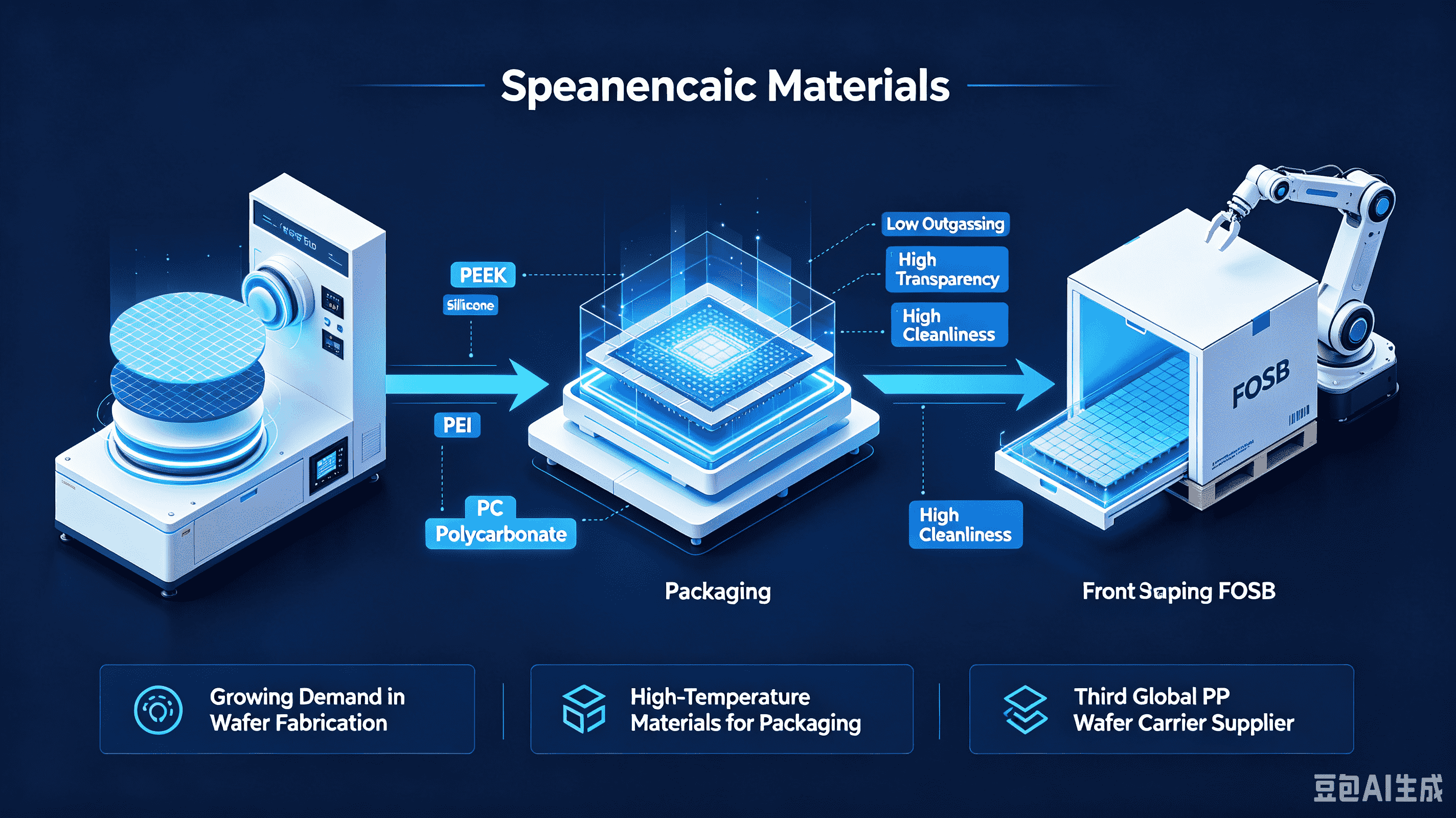
The Xuanjie O3 utilizes TSMC's third-generation 3nm process. The manufacturing of advanced process chips places extremely high demands on material purity, heat resistance, low outgassing, and other performance indicators. In the semiconductor industry chain, engineering plastics used in equipment and related components account for 10% to 20% of production costs. Compared with traditional metal products, engineering plastics offer heat resistance and impact resistance while reducing weight by 20% to 30%.
In wafer manufacturing and packaging processes, high-performance thermoplastics such as PEEK (polyether ether ketone) and PEI (polyetherimide) are experiencing growing demand. Polycarbonate materials, with their low outgassing and high transparency, are used in front-opening shipping boxes (FOSB) and other semiconductor wafer carriers. Taiwan-based Formosa Plastics has invested in the development of high-temperature engineering plastics like PEEK and plans to mass-produce high-cleanliness metallocene PP by the end of the year, becoming the world's third supplier of PP wafer carrier materials.
II. AI Computing Competition Creates a "New Blue Ocean" for Specialty Engineering Plastics
The Xuanjie O3 enhances on-device AI computing power. The explosion of AI computing hardware is transmitting upward along the chain of "terminal applications – PCBs – copper-clad laminates – electronic resins," imposing unprecedented performance requirements on base materials.
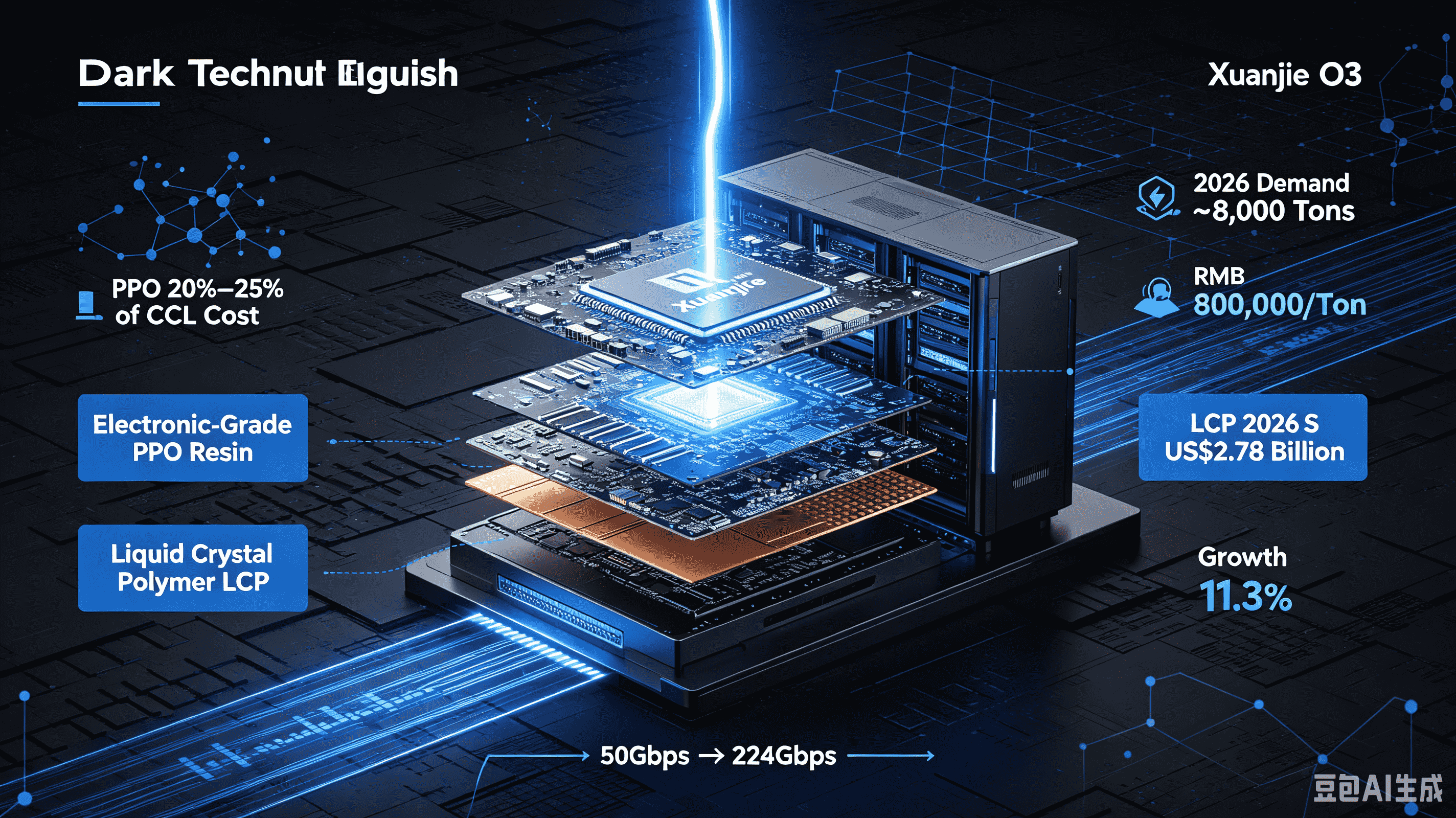
Electronic-grade PPO (polyphenylene oxide) resin has emerged as a "hidden winner" in this trend. PPO accounts for 20% to 25% of the cost in copper-clad laminate production. Driven by AI servers, global demand for PPO in high-speed copper-clad laminates is expected to reach approximately 8,000 tons in 2026, with prices potentially reaching RMB 800,000 per ton. High-end PPO products tailored for AI computing applications can see price increases of 20% to 30%, with some specifications even doubling.
Meanwhile, liquid crystal polymer (LCP), with its extremely low dielectric loss, perfectly ensures signal integrity at high speeds of 50Gbps or even 224Gbps, making it highly sought after in high-speed connectors for AI servers. The LCP market is valued at US$2.78 billion in 2026, with growth expected to accelerate to 11.3%.
III. Supply Chain Price Hikes and Localization Substitution: Risks and Opportunities for Importers
In April 2026, driven by rising crude oil prices due to geopolitical conflicts, South Korea's Kumho Petrochemical and Japan's Mitsubishi Chemical both issued price increase notices for engineering plastics to semiconductor equipment manufacturers, with hikes ranging from 5% to 20%. Engineering plastic prices can vary widely, from US$100 per kilogram to as much as US$50,000 per kilogram, and high-end grades command substantial pricing power.
At the same time, the localization substitution of high-end engineering plastics is accelerating. Products like PPO resin remain heavily import-dependent, with domestic capacity release progressing slowly and overall supply remaining tight. This creates a differentiated competitive advantage for import traders who have access to reliable overseas sources of high-quality materials.
IV. Implications for Engineering Plastics Importers
The launch of Xiaomi's Xuanjie O3 is a microcosm of China's accelerating self-reliance in chip development. This trend offers three key takeaways for engineering plastics importers:
First, chip self-sufficiency equals deterministic growth in high-end material demand. The expansion of advanced-node chip production will directly drive sustained demand for specialty engineering plastics such as PEEK, PEI, high-purity polycarbonate, and LCP. The global market for high-performance plastics in the semiconductor sector is projected to grow at a compound annual growth rate of approximately 7.9%, from about US$3.68 billion in 2025 to US$6.16 billion by 2032.
Second, AI computing infrastructure opens new material tracks. Specialty engineering plastics such as PPO and LCP, once considered niche products, are now becoming "hard currencies" in short supply due to the surge in AI computing demand. Traders should keenly capture this structural shift and proactively establish supply channels for these materials.
Third, supply chain volatility underscores the value of import channels. Against a backdrop of frequent geopolitical tensions and volatile crude oil prices, a stable overseas supply network for engineering plastics is itself a scarce resource. Importers capable of delivering high-purity, high-reliability specialty engineering plastics will occupy an irreplaceable position in the semiconductor value chain.
From the million-unit shipments of the Xuanjie O1 to the official unveiling of the Xuanjie O3, Xiaomi has proven the viability of self-developed chips in just 459 days. For the engineering plastics industry, every step forward in China's chip independence opens a new door of demand for high-end engineering plastics. For import traders, the ability to establish stable overseas supply networks for "chip-grade" engineering plastics—including PPO, PEEK, LCP, and high-purity PC—will determine their core value in the industry chain over the next five to ten years.