
- English
- 简体中文
- Español
- Português
- русский
- Français
- 日本語
- Deutsch
- tiếng Việt
- Italiano
- Nederlands
- ภาษาไทย
- Polski
- 한국어
- Svenska
- magyar
- Malay
- বাংলা ভাষার
- Dansk
- Suomi
- हिन्दी
- Pilipino
- Türkçe
- Gaeilge
- العربية
- Indonesia
- Norsk
- تمل
- český
- ελληνικά
- український
- Javanese
- فارسی
- தமிழ்
- తెలుగు
- नेपाली
- Burmese
- български
- ລາວ
- Latine
- Қазақша
- Euskal
- Azərbaycan
- Slovenský jazyk
- Македонски
- Lietuvos
- Eesti Keel
- Română
- Slovenski
- मराठी

Repeated Sterilization Without Deformation, Long-Term High Temperatures Without Softening—Unveiling the "Endurance King" Among Engineering Plastics: PES
Among many high-performance engineering plastics, there is one material that has quietly become a "favorite" in high-end fields such as medical devices, aerospace, and electronics due to its exceptional heat resistance, dimensional stability, and transparent properties. This material is polyethersulfone (PES)—a key material you may not have noticed but has deeply integrated into modern technological life.
Decoding PES: The "Stable Anchor" in High-Temperature Environments
Polyethersulfone (PES) is a high-performance special engineering plastic belonging to the sulfone polymer family. Compared to ordinary plastics, its most notable feature is its ability to maintain excellent mechanical properties and dimensional stability even under long-term high-temperature conditions. While many materials begin to soften and deform above 150°C, PES can easily withstand continuous operating temperatures of 180–200°C and even tolerate short-term exposure to environments above 220°C.
This exceptional heat resistance stems from its unique molecular structure: the alternating arrangement of sulfone groups and ether bonds in the main chain grants the material a high glass transition temperature (approximately 225°C) and outstanding thermal oxidation stability. More importantly, PES retains excellent rigidity at high temperatures, with its flexural modulus decreasing far less than other engineering plastics under such conditions.
Four Core Advantages: Why Choose PES?
1. Unmatched Thermal Stability
PES can withstand long-term use at temperatures up to 180°C and short-term exposure above 200°C. This characteristic makes it the material of choice for applications such as medical devices requiring repeated high-temperature steam sterilization and automotive engine components.
2. Excellent Dimensional Accuracy
With an extremely low coefficient of thermal expansion and moisture absorption, PES products maintain stable dimensions across varying temperature and humidity environments. This property is crucial for precision instruments, electronic connectors, and other fields requiring high-precision compatibility.
3. Outstanding Retention of Mechanical Properties
Unlike many materials whose mechanical properties degrade rapidly at high temperatures, PES retains most of its mechanical strength in high-temperature environments. This stability is a key consideration for many metal replacement applications.
4. Superior Transparency and Safety
PES is one of the few engineering plastics that combines high heat resistance with good transparency. It is also free of bisphenol A, meeting safety standards for food contact and medical applications.
Application Areas: How PES Is Changing Our Lives
Medical and Health Fields: PES has become one of the preferred materials for high-end medical devices. From reusable surgical instruments and anesthesia masks to hemodialyzer housings, PES can withstand repeated sterilization at 134°C high-temperature steam without deformation or degradation. This characteristic is particularly valuable in the trend toward replacing disposable medical products.
Electronics and Electrical Industry: In miniaturized, highly integrated electronic devices, PES is used to manufacture high-temperature-resistant connectors, coil bobbins, and circuit board substrates. Its excellent dielectric properties and flame-retardant characteristics (UL94 V-0 rating) ensure the safe and reliable operation of electronic devices.
Transportation Sector: With the acceleration of automotive electrification, the demand for high-temperature-resistant insulating materials in motors and electronic control systems is increasing. The application of PES in key components such as motor insulation parts and sensor housings is helping new energy vehicles break through performance limits.
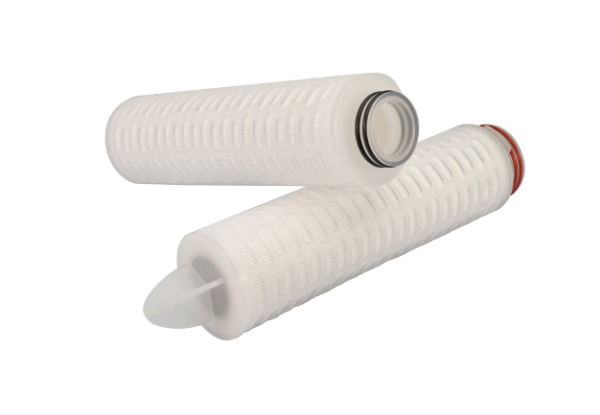
Food and Fluid Processing: PES’s hydrolysis resistance and plasticizer-free properties make it an ideal choice for food processing equipment and drinking water contact components. From transparent water tanks in coffee machines to water filter housings, PES enhances the user experience while ensuring safety.
Processing and Application Tips: Maximizing PES’s Potential
Although PES offers exceptional performance, fully realizing its potential requires professional processing techniques and application expertise:
Preprocessing Is Crucial: PES has relatively high moisture absorption and must be thoroughly dried before processing (recommended: 150°C for 3–4 hours). Otherwise, surface silver streaks or reduced mechanical properties may occur.
Wide but Precise Processing Temperature Window: PES’s processing temperature typically ranges from 330°C to 380°C. Precise temperature control helps achieve optimal product performance and appearance.
Mold Design Considerations: Due to PES’s high melt viscosity, larger gates and runner sizes are required. A mold temperature of 140–160°C is recommended for optimal results.
Post-Processing Enhances Performance: Proper heat treatment (annealing) can further release internal stresses in the product, improving the dimensional stability and long-term performance of PES products.
Future Outlook: The Infinite Potential of PES in Emerging Fields
With the development of new technologies such as 5G communication, the Internet of Things, and artificial intelligence, higher demands are being placed on high-performance materials. PES shows significant potential in the following areas:
5G Communication Equipment: High-frequency, high-speed signal transmission requires extremely low dielectric loss. PES’s dielectric properties make it a promising key material for next-generation communication devices.
Aerospace Lightweighting: While ensuring safety and reliability, special engineering plastics like PES are gradually replacing metal components, contributing to weight reduction and efficiency improvement in aerospace equipment.
Sustainable Development Applications: PES’s reusability and long lifespan align with the principles of the circular economy, offering broad prospects in reusable medical devices and durable consumer goods.