
- English
- 简体中文
- Español
- Português
- русский
- Français
- 日本語
- Deutsch
- tiếng Việt
- Italiano
- Nederlands
- ภาษาไทย
- Polski
- 한국어
- Svenska
- magyar
- Malay
- বাংলা ভাষার
- Dansk
- Suomi
- हिन्दी
- Pilipino
- Türkçe
- Gaeilge
- العربية
- Indonesia
- Norsk
- تمل
- český
- ελληνικά
- український
- Javanese
- فارسی
- தமிழ்
- తెలుగు
- नेपाली
- Burmese
- български
- ລາວ
- Latine
- Қазақша
- Euskal
- Azərbaycan
- Slovenský jazyk
- Македонски
- Lietuvos
- Eesti Keel
- Română
- Slovenski
- मराठी

TPU Material: The Versatile Elastomer Transforming Modern Life and Industry
The rebound of your shoe soles during a morning run, the reassuring grip of your phone case at work, the flexible support of your car seat, the stable comfort of anti-slip mats at home — these seemingly unrelated moments are all quietly supported by the same advanced material: Thermoplastic Polyurethane Elastomer (TPU). This innovative material, merging the advantages of both rubber and plastic, is permeating various industries with remarkable breadth and depth, redefining the possibilities of product design. In the innovative landscape of TPU, global chemical leaders like BASF with its Elastollan® series are continuously pushing the boundaries of industry standards and applications through superior stability and a wide range of customizable grades.
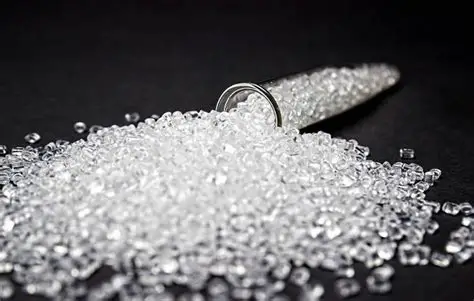
The Nature of TPU: A Scientific Balance of Flexibility and Rigidity
TPU is a unique polymer that perfectly combines the high elasticity of rubber with the mechanical strength of plastics. At the molecular level, its structure consists of alternating rigid segments and flexible soft segments, forming a microscopic "island-sea" morphology. This design allows the hard segments to provide support while the soft segments absorb energy under stress, achieving a harmonious balance between rigidity and flexibility. For instance, BASF's Elastollan® exemplifies precise molecular engineering, offering a broad property spectrum from very soft to very hard, while meeting stringent requirements for food contact and medical compliance.
A key distinction from traditional rubber is that TPU is a thermoplastic material. It can be repeatedly processed and reshaped through heating, significantly improving material utilization and recyclability — a crucial advantage in today's growing circular economy. Industry leaders are actively developing more sustainable solutions, such as BASF's partially bio-based TPUs that incorporate renewable raw materials to reduce the carbon footprint.
Core Advantages of TPU: Six Key Properties
Outstanding Physical Performance: TPU exhibits exceptional wear resistance, with lab data showing 5-8 times greater abrasion resistance than natural rubber. It also offers excellent tear strength; even thin films of 0.3-0.5 mm can withstand high tensile forces.
Broad Hardness Range: By adjusting its formulation, TPU hardness can be customized from as soft as Shore A70 (similar to a rubber band) to as rigid as Shore D85 (comparable to hard plastics), allowing it to meet vastly different application needs. The BASF Elastollan® series provides a complete portfolio across this entire hardness range.
Excellent Environmental Adaptability: TPU demonstrates good resistance to oil, hydrolysis, and mildew, maintaining stable performance across a temperature range of -40°C to 120°C. Its stable molecular structure resists degradation from UV exposure and ozone. Suppliers like BASF also offer specialized grades with enhanced weatherability and UV resistance for long-term outdoor use.
Superior Safety and Eco-Friendliness: High-quality TPU is free from harmful plasticizers like phthalates, complying with stringent standards like EU RoHS and REACH. Companies like BASF are committed to developing bio-based and recyclable formulations to drive the industry's green transition.
Diverse Processing Capabilities: TPU can be processed by injection molding, extrusion, calendering, blow molding, and is even suitable for emerging 3D printing technologies. For example, BASF's TPU filaments are widely used in functional additive manufacturing, offering designers almost unlimited structural innovation potential.
Favorable Surface Characteristics: TPU products feature a smooth, comfortable surface texture and can achieve appearances ranging from high clarity to various colors through additives, meeting diverse aesthetic requirements.
A Panoramic View of TPU Applications: From Everyday Items to High-Tech Products
Consumer Goods: The Unsung Hero Enhancing Quality of Life
• Sports Equipment Revolution: Modern athletic shoes extensively use TPU in midsole cushioning systems, elastic uppers, and torsional support plates. It provides essential energy return (with rebound rates exceeding 60%) while significantly reducing weight. Approximately 60% of sports shoes produced globally annually incorporate TPU components. High-performance materials like BASF's Elastollan® are chosen by leading brands for their consistent quality and range of elasticity.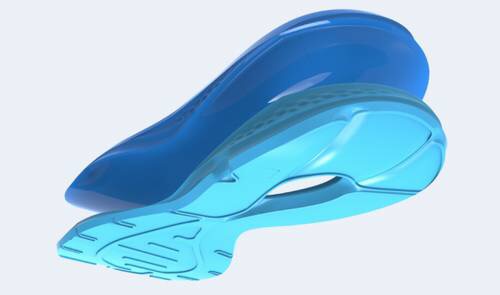
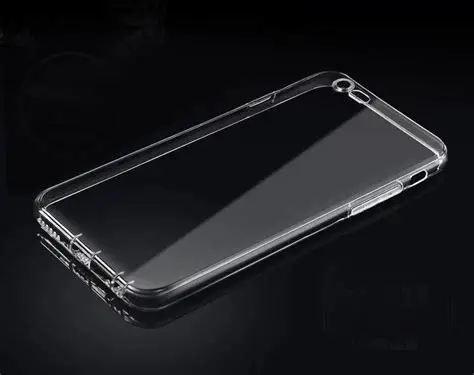
• Electronics Protection: Smartphone cases, tablet covers, headphone cables — TPU offers ideal shock absorption, its flexibility effectively dissipating impact energy from drops. Its tunable transparency and color allow products to showcase original designs while providing full protection. BASF has developed specialty TPU grades for consumer electronics that balance protection with aesthetic design.
• Upgraded Daily Essentials: From abrasion-resistant backpack coatings to flexible eyeglass frames, watch straps to utensil handles, TPU is replacing many traditional materials, enhancing product durability and user experience.
Industrial & Transportation: Ensuring Both Reliability and Innovation
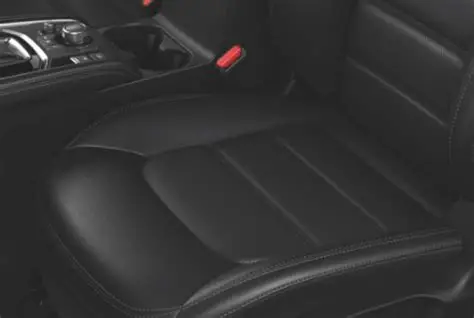
• Automotive Manufacturing: A modern vehicle contains over 200 TPU parts, including interior upholstery, seat padding, wire harness conduits, and body seals. TPU's weather resistance and performance at low temperatures (remaining elastic at -40°C) make it ideal for demanding automotive environments. BASF supplies a range of specialty TPUs to the automotive industry, meeting specifications for low volatility and aging resistance.
• Critical Industrial Components: TPU-made drive belts, conveyor belts, and seals outperform in machinery, typically lasting 30-50% longer than traditional rubber parts with reduced maintenance.
• Healthcare Products: Thanks to good biocompatibility and sterilizability, TPU is widely used in IV tubing, respiratory masks, wound dressings, and more. Its transparency aids medical monitoring, while its soft texture enhances patient comfort. BASF offers medical-compliant TPU grades for high-end device manufacturing.
Cutting-Edge Technology: A Testing Ground for Material Innovation
• Additive Manufacturing Material: TPU filament has become a key choice for functional 3D printing, ideal for complex structures requiring flexibility, such as customized orthotics or robotic grippers. BASF's Ultrafuse® TPU series is one of the well-known materials for industrial 3D printing.
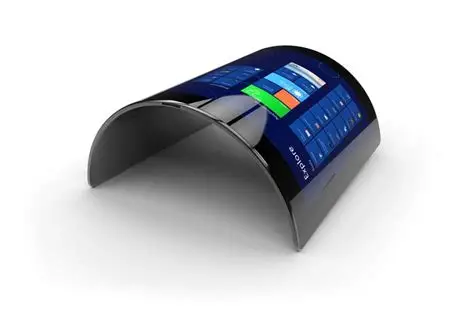
• Flexible Electronics Substrate: In wearables and flexible displays, TPU films serve as base materials, providing necessary mechanical支撑 and environmental protection for circuits without hindering device flexibility.
• Smart Textile Coatings: TPU microporous membranes impart waterproof and breathable functionality to fabrics, used in high-end outdoor apparel and protective gear. Recent developments integrate TPU with sensing technologies for smart responsive textiles.
Future Trends: The Evolution of TPU
As material science advances, TPU is evolving towards higher performance, greater intelligence, and enhanced sustainability:
High-Performance Specialty TPU: Molecular engineering is developing grades resistant to temperatures above 150°C and harsh chemicals for extreme environments in aerospace and energy sectors.
Smart Functional TPU: Integrating shape memory, self-healing, and electrochromic properties for materials that actively adapt to environmental changes.
Green & Sustainable TPU: The proportion of bio-based TPU (from renewable resources like castor oil) is increasing, with biodegradable formulations under active development to support the circular economy. Companies like BASF are investing significantly in this area, developing TPUs from bio-circular feedstocks.
Composite Multifunctional TPU: Incorporating nanofillers or fiber reinforcement to create composites with added conductivity, thermal management, or electromagnetic shielding capabilities.